EV

Gas Gas TXT-E: professionals meet electric power

GasGas_txt_e
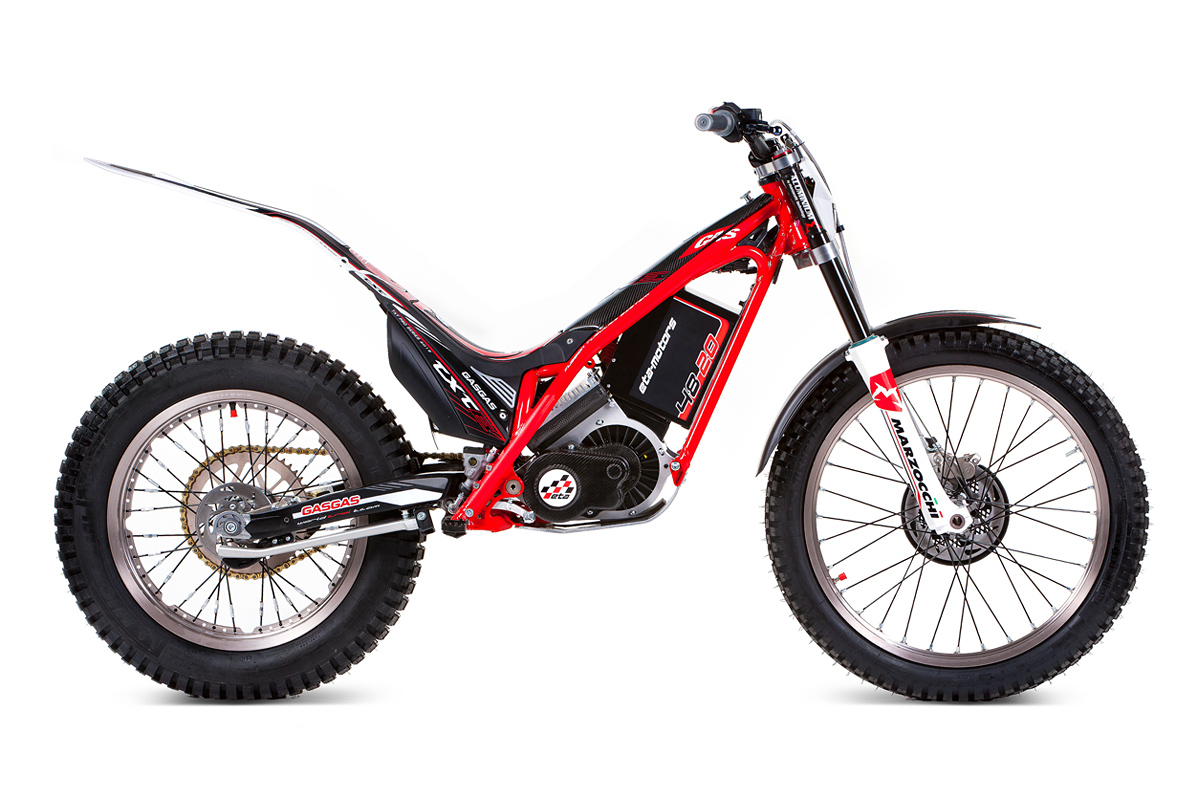
Nata dalla collaborazione tra l’azienda iberica Gas Gas, ultra premiata produttrice di moto da trial e off-road e l’azienda tedesca Eta Motors di Dachau. La TXT-E figura sia come un modello di serie nel listino della casa sia come una conversione a zero emissioni delle loro moto TXT Pro (prodotte dal 2010 in poi) disponibile in kit o come moto completa sul sito del partner germanico. Il kit TXT4822 (nelle foto il kit 4820) prevede tutte le parti per sostituire il gruppo serbatoio, motore e scarico originali e comprende: il nuovo motore brushless sviluppato da Eta con una potenza di picco di 10kW e con un valore di coppia di 20Nm, il pacco batterie agli ioni di Litio da 48V, l’indicatore di carica e il caricatore. Invariati il telaio e la ciclistica che conta una forcella Marzocchi in alluminio e un mono ammortizzatore posteriore della Sachs, freni a disco 185mm con pinza a 4 pistoncini all’anteriore e 150mm con pinza a 2 pistoncini al posteriore. Il peso è di 63Kg. L’autonomia, a seconda dell’utilizzo, varia da 45 minuti a 2 ore. Le batterie si caricano in 2,5 ore.
txt_e_motor

Born from the collaboration between the Iberian Gas Gas company, a producer of award-winning trial and off-road bikes and the German company Eta Motors located in Dachau. The TXT-E figure both as a production model in the list of the company as either a zero emissions conversion of their bikes TXT Pro (produced from 2010) available in kit form or as a complete bike on the website of the German partners. The kit TXT4822 (pictured kit 4820) includes all parts to replace the original tank, engine and exhaust as: the new brushless motor developed by Eta with a peak power of 10kW and a torque of 20Nm, the 48V lithium-ion battery pack, the charge indicator and charger. Unchanged frame and chassis featuring a Marzocchi aluminum fork and a rear Sachs shock absorber, 185mm disc brakes with 4 piston calipers at the front and 150mm disc with 2 piston caliper at the rear. The weight is 63Kg. The battery range, depending on usage, varies from 45 minutes up to 2 hours. The batteries charge in 2.5 hours.

GasGas_txt_e_test
Adam Raga, Red Bull rider with the TXT-E with TXT4820 kit

Kuberg: green Czech freedom

Kuberg_Trex

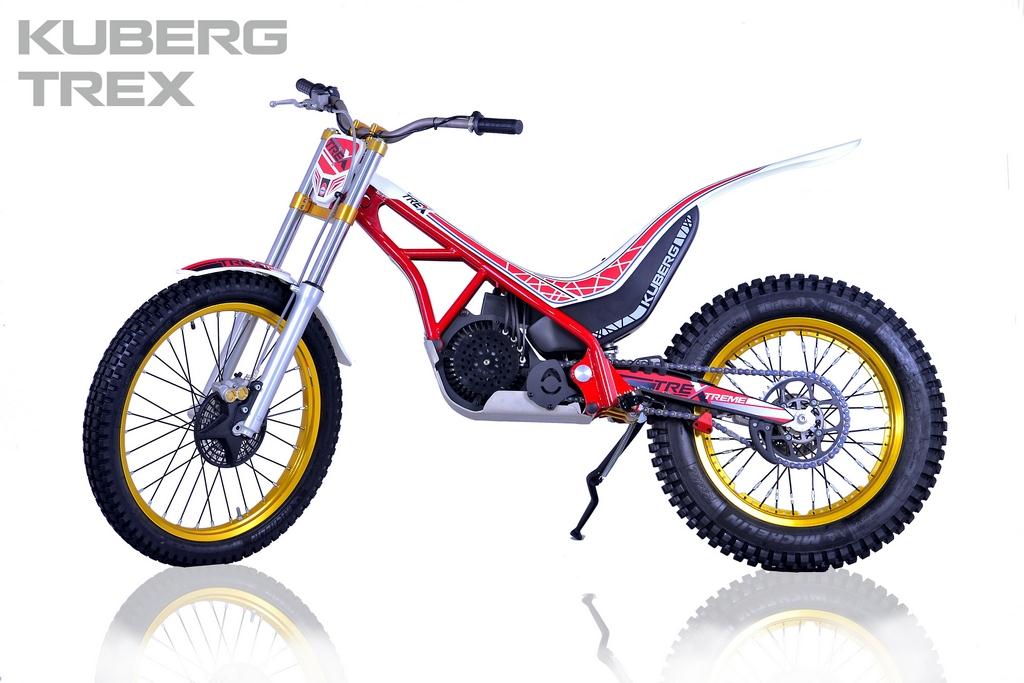
Dalla Repubblica Ceca provengono questi interessanti mezzi per il tempo libero, il divertimento ma anche per la competizione. L’azienda Kuberg (presente anche ad EICMA 2014) nel suo listino ha varie moto tutte elettriche per cross e trial, alcune dedicate al pubblico giovanissimo (dai 2 ai 12 anni) e alcune per il pubblico adulto. Dedico l’articolo a queste ultime proposte: la Trex (trial professionale) e la Free-Rider (mezzo per divertimento outdoor). La Trex nella foto in alto è in tutto e per tutto una moto da trial che grazie alle 4 diverse mappature (Eco, Trek, Wet Trial e Dry Trial)  per l’erogazione della potenza permette l’uso sia ai principianti che ai professionisti della disciplina con un’autonomia che può raggiungere le 3 ore di utilizzo. La moto ha un telaio in acciaio, monta un motore DC Brushless da 5kW di potenza (con un picco di 7kW) e una coppia di 16Nm raffreddato ad aria. La velocità massima è di 55Km/h (anche se nel trial questo dato è l’ultimo ad interessare). L’autonomia che varia da 50 a 150 minuti in base all’uso è garantita da un pacco batterie Litio polimeri da 48V. Il tutto in peso di 67kg. Il prezzo sul sito purtroppo non c’è.


From the Czech Republic comes these interesting bikes for leisure, entertainment but also for competition. Kuberg company (present at EICMA 2014) has various Electric bikes in its product list for motocross and trial, some dedicated to very young riders (aged 2 to 12 years) and some for adults. I dedicate this article to the adult proposals: the Trex (trial bike) and the Free-Rider (bike for outdoor fun). The Trex pictured above is real trial bike that thanks to 4 different maps (Eco Trek, Wet and Dry Trial Trial) for the power output allows use for both beginners and professionals discipline with a range of up to 3 hours of use. The bike has a steel frame, it features a air-cooled brushless 5kW DC motor (with a power peak of 7 kW) and a torque of 16Nm. The maximum speed is 55km / h (not so important in trial). The autonomy that varies from 50 to 150 minutes depending on use is guaranteed by a Lithium polymer battery pack 48V. The whole weight of 67kg. Unfortunately there is not the price on the website

Kuberg_FreeRider

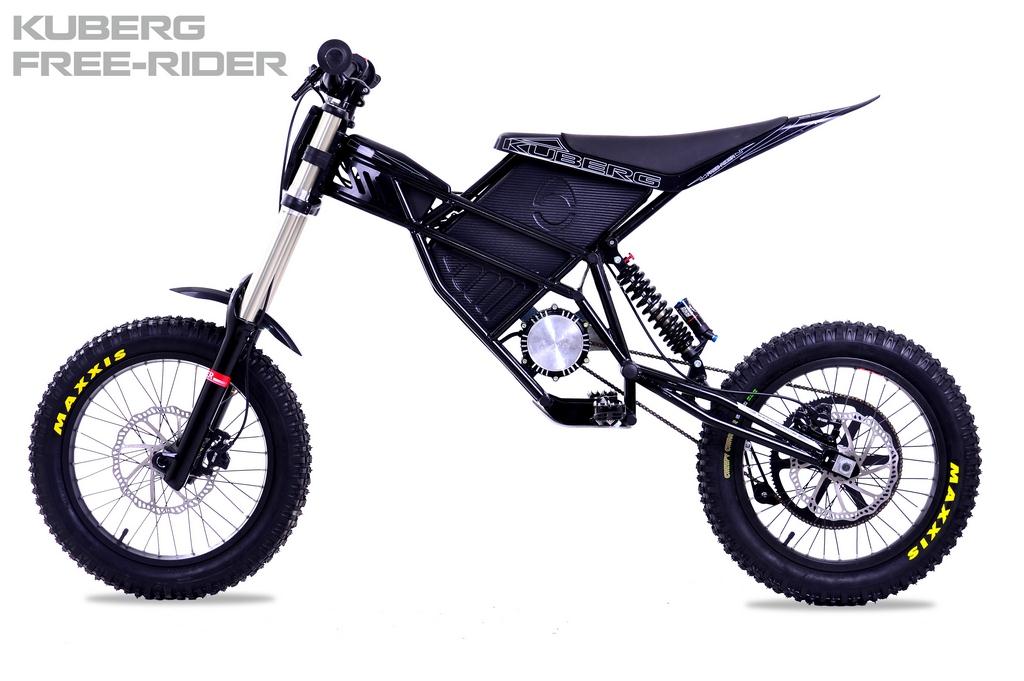
La Free-Rider invece è una moto leggera (solo 38Kg) fatta per il divertimento all’aria aperta. Nata prevalentemente per teenagers può essere usata anche da adulti e promette grandi soddisfazioni per la sua facilità d’uso. Raggiunge i 55Km/h e grazie al pacco batterie Litio polimeri da 15Ah e al motore elettrico BLDC da 2kW di potenza promette 1 ora di divertimento puro guidata al massimo, ma ovviamente può essere usata più a lungo con un uso meno esasperato. Si ricarica in 2 ore da una presa di corrente standard. Il prezzo è di circa 2800 euro.


The Free-Rider is a light bike (only 38Kg) made for outdoor fun. Created primarily for teenagers can also be used by adults and promises great rewards for its ease of use. Reaches 55km/h thanks to the 15Ah Lithium polymer battery pack and the BLDC 2kW electric motor promises 1 hour of pure fun full throttle, but obviously can be used for longer with a less exaggerated riding style. It recharges in 2 hours from a standard power outlet. The price is 3500$.

PIAGGIO ELECTRIC BIKE PROJECT

eicma2014_Piaggio_ebike

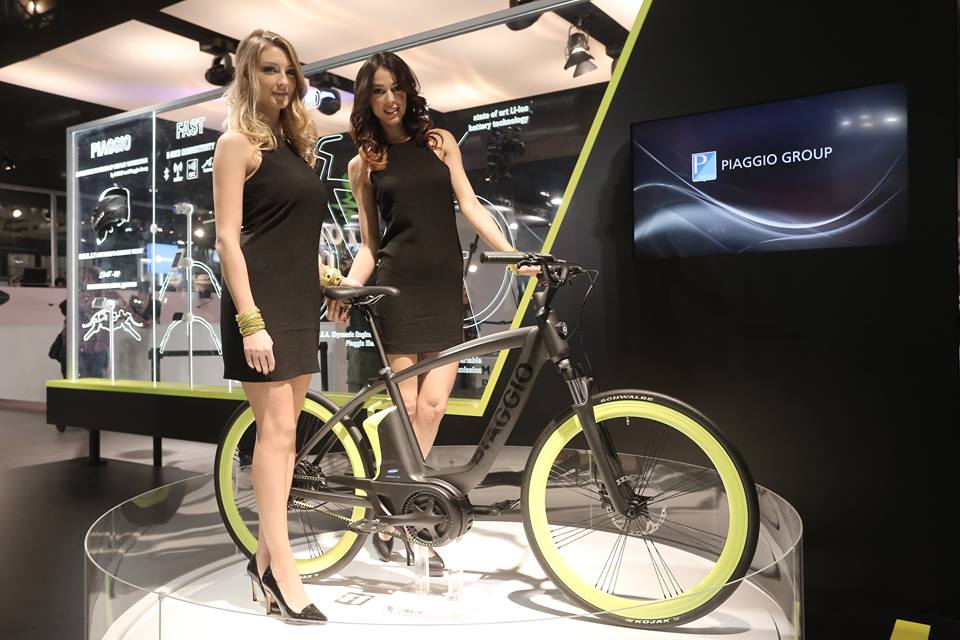
Presentata all’EICMA 2014 di Milano l’innovativa e-bike di PiaggioPiaggio Electric Bike Project supera il concetto di bicicletta a pedalata assistita e si propone come un mezzo che interpreta a 360 gradi le esigenze più avanzate di una mobilità, non più intesa semplicemente come capacità di spostamento ma anche come presenza e condivisione di informazioni nelle più moderne forme della rete e interazione col proprio mezzo. Il design elegantemente sportivo che distingue Electric Bike Project è frutto del centro stile Piaggio che ha lavorato per coniugare il migliore e più distintivo design italiano con la funzionalità e la comodità di esercizio. Modernità, raffinatezza delle soluzioni e semplicità sono le prole chiave che hanno ispirato il lavoro dei designer del gruppo Piaggio. Grazie alla tecnologia PMP (Piaggio Multimedia Platform) Electric Bike Project presenta un’avanzatissima interfaccia tra uomo e mezzo meccanico e garantisce una condivisione continua di dati col mondo.  Il cuore di Electric Bike Project di Piaggio è una unità di propulsione elettrica da 250W-350W interamente progettata, sviluppata e costruita dal Gruppo Piaggio. Si tratta di un motore modernissimo di grande compattezza e dalla forma studiata per un suo perfetto inserimento nell’estetica elegante del telaio. La sua sagoma assialsimmetrica, ovvero disegnata attorno all’asse pedale, consente infatti di comprendere tutto il motore elettrico in ombra alla corona, cosí da ridurne grandemente l’impatto estetico. Ma è tutto il powertrain (ovvero l’insieme di motore, batteria e display di controllo) di Piaggio Electric Bike Project a distinguersi per la tecnologia adottata e per le funzionalità proposte. A tutto vantaggio della affidabilità, l’innovativo controllo sviluppato da Piaggio della macchina elettrica è attuato da avanzati algoritmi di controllo sviluppati da Piaggio. Il display di ultima generazione è “contactless” e si alimenta automaticamente, in vicinanza della centralina, via NFC. La connessione USB ha la duplice funzione di ricarica dello smartphone e di aggiornamento software. Anche la diagnosi è possibile via smartphone, da parte dell’utilizzatore, mentre per il centro di assistenza è possibile intervenire via tablet – sempre grazie alla tecnologia bluetooth – per un check più completo. Piaggio Electric Bike Project, grazie alle tecnologie di cui dispone, si distingue anche per l’elevato livello di sicurezza: le centraline di cruscotto, batterie e motore elettrico sono collegate univocamente. Significa che le tre unità possono funzionare solo se collegate e dialoganti l’una con le altre. Rimuovendo il display (che funge dunque da vera chiave elettronica), per esempio in caso di sosta, si rende di fatto inutilizzabile la Electric Bike. Nella batteria è alloggiato un modulo GPS/GSM che funziona sia da antifurto satellitare sia da elemento di trasmissione dati da/per la batteria. E cosí possibile verificarne lo stato di carica via smartphone e ricevere, sempre sul proprio device, lo stato di allerta in caso di carica scarsa, per esempio dopo una lunga sosta. La batteria da 400 Wh, agli ioni di litio, è elegantemente alloggiata sotto la sella in corrispondenza del tubo verticale e fornisce una autonomia particolarmente ampia, mediamente compresa tra i 60 e i 120 chilometri in dipendenza delle modalità e condizioni al contorno di utilizzo. La batteria garantisce il più alto livello di sicurezza e, come tutte le componenti del powertrain, è completamente stagna (grado IP 65). Piaggio Electric Bike Project adotta la trasmissione a cinghia in combinazione con un evoluto cambio automatico a variazione continua, assistito elettronicamente per assicurare sempre il miglior rapporto tra una scelta praticamente infinita di combinazioni. Si tratta di una tecnologia che attinge alla straordinaria esperienza tecnica del Gruppo Piaggio in questo genere di trasmissioni. In omaggio alla sicurezza attiva il potente comparto freni è composto da due dischi dal diametro di 180 mm all’anteriore e 160 mm al posteriore, morsi da pinze idrauliche.  Tramite PMP, inoltre, sarà possibile selezionare delle modalità predefinite di erogazione della potenza lungo l’arco di utilizzo, delle vere e proprie “mappature motore”. La funzione “Back Home Alert”, avverte il ciclista quando l’autonomia residua della batteria non consente il rientro alla base o a una qualunque destinazione preimpostata. A quando negli showroom Piaggio? (testi e info dalla pagina ebike.piaggio.com)

Piaggio_ebike

Introduced at EICMA 2014 in Milan, the all new e-bike by Piaggio group. Piaggio Electric Bike Project goes beyond the concept of an assisted-pedal bicycle and approaches the market as a vehicle that interprets the most progressive mobility needs at 360 degrees, no longer intended simply as the ability to move about, but also as the presence and sharing of information over the most modern network and interaction forms with your vehicle. The elegantly sport design of the Electric Bike Project is the result of the Piaggio style centre which worked to combine the best and most distinctive Italian design with functionality and operating convenience. Modern style, refined solutions and simplicity are the keywords that inspired the Piaggio Group designers in their work. Thanks to PMP (Piaggio Multimedia Platform) technology, Electric Bike Project has an ultra advanced man-mechanical vehicle interface and guarantees constant data sharing with the world.  The heart of the Piaggio Electric Bike is a 250W-350W electric power unit entirely designed, developed and built by the Piaggio Group. It is an ultra modern and extremely compact motor with a shape designed for perfect insertion in the elegant aesthetics of the Electric Bike. In fact, its axial-symmetric shape, in other words, designed around the pedal axle, allows it to include the entire electric motor hidden behind the sprocket in order to greatly reduce the aesthetic impact. But it is the entire powertrain (the motor, battery and control display assembly) of the Electric Bike Project that stands out for the technology it uses and for the functions it provides. The electric motor control system is completely innovative and was developed by Piaggio. It works thanks to sophisticated control algorithms which guarantee its reliability. The latest generation display is “contactless” and automatically powered via NFC near the control unit. The USB connection serves the dual function of being a smartphone charger and software update port. Diagnostics are also possible via smartphone by the rider, whereas for the service centre operations are possible via tablet – thanks once again to Bluetooth technology – for a more complete check. Piaggio Electric Bike Project, thanks to its technology, also stands out for its high level of safety: the dashboard control unit, batteries and electric motor are connected unequivocally. This means that the three units can operate only if they are connected and communicating with one another. For example, removing the display (which operates as an electronic key) when parking renders the Electric Bike effectively unusable. A GPS/GSM module is housed in the battery which functions both as a satellite antitheft device and a data transmission element from/for the battery. This way the charge status can be checked with a smartphone and you can receive the alert status on your device in the event of a poor charge, for example after a long period of disuse. The 400 Wh ion and lithium battery is elegantly housed under the saddle in correspondence to the vertical pipe and provides particularly long range, on average between 60 and 120 kilometres depending on the mode of use and surrounding conditions. The battery guarantees the highest possible level of safety and, as with all of the powertrain components, it is completely waterproof (IP 65). The Piaggio Electric Bike Project uses a belt drive combined with an advanced continuous variation automatic transmission, electronically assisted to always ensure the best possible ratio between an almost infinite choice of combination. This is technology that takes advantage of the Piaggio Group’s extensive technical experience with this type of transmission. As a tribute to active safety the powerful braking system is made up of two 180 mm discs on the front and 160 mm on the rear, gripped by hydraulic callipers. Also, through PMP you will be able to select predefined power output modes throughout the arc of use, real “motor mappings”. The “Back Home Alert” function notifies the cyclist when the remaining battery range is insufficient to return home or to any preset destination. When it will be available in showroom? (text and info from ebike.piaggio.com)
Mugen Shinden San: racing at the green TT 2014

Mugen_Honda_ShindenSan

Gareggiando al TT Zero 2014 (il Tourist Trophy per moto a emissioni zero) la Mugen Shinden San, ha stabilito un nuovo terrificante record della pista alla velocità di 188Km/h! Nel reparto R&D c’è stato un impegno massivo per lo sviluppo della moto e anche sapendo che c’è stata collaborazione con la Mission Motors, non c’erano dubbi che anche Mugen sapesse una o due cose su come si costruisce una moto da corsa. Ogni singolo pezzo per la versione 2014 della moto è diverso, maggiore capacità della batteria agli ioni di litio (370V) e di nuovi sistemi di controllo per la gestione coppia spropositata del motore che produce 220 Nm. Il motore brushless trifase a bagno d’olio da 100 kW (134 CV) è ora disponibile in una confezione più leggera (anche se 240 kg non sembra poi così leggero), più piccola e con una migliore aerodinamica. Dopo aver dominato tutte e tre le sessioni di prove libere per la sesta edizione del TT ZERO stabilendo un nuovo record sul giro ad ogni sessione, la Mugen Shinden San ha riportato una netta vittoria 1-2. Attraverso le tre sessioni e corsa, velocità medie sono aumentate di quasi 10Km/h. Impressionante vedere un tale progresso svoltosi apparentemente in tempo reale. Nella terza sessione, entrambi i compagni di squadra Mugen (J. McGuiness e B. Anstey), hanno battuto tutti i precedenti record riportati da moto elettriche con 185Km/h e 181Km/h, rispettivamente, durante la gara McGuinnes ha stabilito il giro più veloce di sempre a 188Km/h!

2014_tt-zero_Honda

Racing at the 2014 Isle of Man TT Zero (the TT for zero emission motorcycle) Mugen Shinden San, electric racebike establish a new terrifying lap record at 117MPH lap! In the electric bike R&D department, there appears to be massive development and while we know there has been collaboration with Mission Motors, it’s not like Mugen doesn’t know the odd thing or two about building race bikes. Every single part for 2014 bike version is different, increased Laminate-type Li-ion battery capacity (370V) and new control systems managing the ultra-high torque of the motor which produces 162 ft.-lbs. (220 Nm). The 100 kW (134 HP) oil-cooled three-phase brushless motor now comes in a lighter package (though at 240 kg it’s not light), smaller and with improved aerodynamics. After dominating all three practice sessions for the sixth running of the TT ZERO event setting a new lap record with every session, the Mugen Shinden San electric racebike delivered a clear 1-2 victory. Across the three sessions and race, average speeds have increased 6 mph. It’s so impressive to watch such massive progress being made in seemingly real time. In the third session, both Mugen teammates (J. McGuiness and B. Anstey), broke all previous electric bike records with 115.6 MPH and 113.6 MPH respectively, during the race McGuinnes established the fastest lap ever at 117.4 MPH!

Tacita T-Race Rally: silent desert storm

Tacita_TRace_Rally
Per il vostro prossimo raid in un angolo deserto ecco una moto davvero speciale, dalla gamma dell’azienda torinese Tacita ecco la T-Race Rally grande enduro elettrica con componenti di altissimo livello. Nascendo dalla famiglia delle T-Race molte sono le soluzioni condivise con la Enduro, la Cross e la Motard. L’impostazione della ciclistica in particolare della forcella anteriore e degli ammortizzatori è stata rivista per un uso specialistico e il gruppo batterie Litio-polimero ha una capacità massima di ben 10,6 kWh. Resta il motore con potenza nominale di 9 kW (e picco di 27 kW), il cambio a 5 marce con trasmissione finale a catena e le 3 mappature del sistema di gestione (Sport, Eco, Riserva).


For your next raid into the desert, here it is a very special bike, from the line-up of Tacita company based in: the T-Race Rally a big electric enduro motorcycle with high quality components. Born from the T-Race family with many shared solutions with the Enduro, the Cross and Motard. The setting of the bike especially the front forks and shock absorbers have been modified for a specialized use and Lithium-polymer batteries have a capacity of 10.6 kWh. From the company line-up the engine rated with 9 kW power (with a 27 kW power peak), the 5-speed gearbox with chain transmission and the 3 management system programs (Sport, Eco Reserve).

Zombie 222 by Bloodshed Motors: green muscles

Zombie222_front

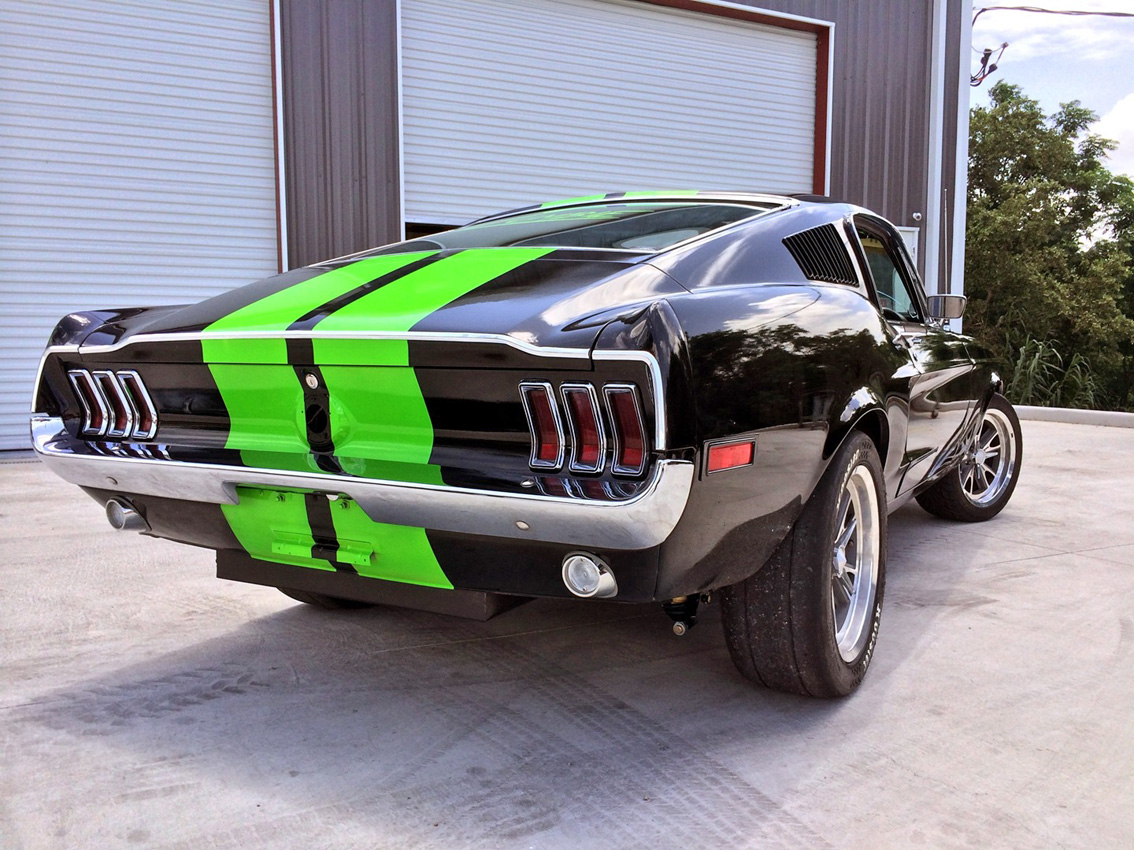
Amate le mitiche muscle car degli anni 60 ma volte avere cura dell’ambiente? I signori della Bloodshed Motors ad Austin (Texas) hanno creato l’auto che fa per voi: la Zombie 222 fusione della moderna tecnologia a trazione elettrica con il corpo vettura di una fantastica Ford Mustang fastback del 1968. Molti grideranno allo scandalo e all’abominio ma numeri alla mano questa moderna reinterpretazione del mito non lascia nessuna nostalgia o rimpianto a parte il brontolio del motore V8. La Zombie 222 infatti monta una coppia di motori elettrici WarP 11, una pacco batterie Litio-polimero da 42 kWh ed è in grado di coprire lo 0-100km/h in appena 3 sec. e il 1/4 di miglio in 10,5sec. L’autonomia in questa configurazione, a patto che non si passi il tempo a stabilire record d’accelerazione, è di circa 201km. Sul sito della Zombie 222 ci sono molti video in cui la si vede in azione, non ci sono dettagli invece sul prezzo di questo gioiello.

Zombie222_back

Do you love legendary muscle cars of the 60’s but you want to take care of the environment? Guys at Bloodshed Motors in Austin (Texas) have created the car for you: Zombie 222 fusion of modern technology of electric-powered car with the body of a cool 1968 Ford Mustang fastback. Many will scream for the scandal and abomination but numbers say that this modern reinterpretation of the myth leaves no longing or regrets except for the rumble of the V8 engine. The Zombie 222 mounts a pair of WarP 11 electric motors, a 42 kWh lithium-polymer battery pack and is able to cover the 0-60MPH in just 3 sec. and the 1/4 mile in 10,5sec. Autonomy in this configuration, as long as you do not spend your time burning traffic lights, is about 125 miles. On the website of the Zombie 222 there are many videos of this car in action, no details about the price of this jewel instead.

Visio.M by TUM: young green project

visiom_TUM

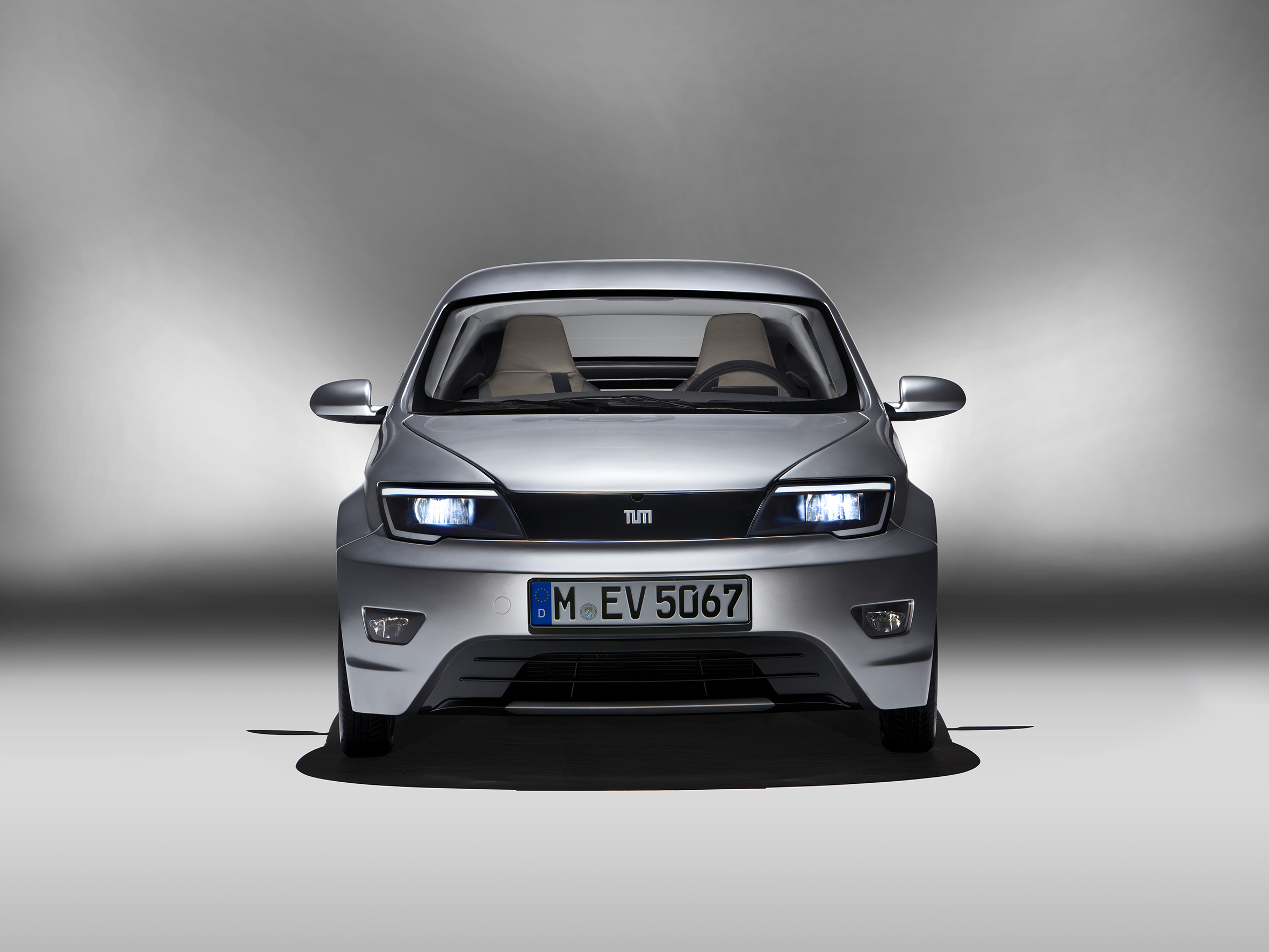
Alla settima fiera della Mobilità Elettrica e Ibrida di Monaco di Baviera è stata presentata la versione definitiva della concept elettrica Visio M, una piccola vettura dalla linea piacevole che promette costi abbordabili, sicurezza, comfort, autonomia ragionevole e zero emissioni. Lo studio e lo sviluppo del progetto sono stati curati da un team dell’Università Tecnica di Monaco di Baviera (TUM), che ha realizzato la nuova auto green in collaborazione con alcuni specialisti del settore automotive. Oltre alla TUM, nel progetto Visio M, sono coinvolti BMW AG e Daimler AG, i produttori di componenti Autoliv BV & Co. KG, Continental Automotive, Siemens AG, Texas Instruments Germany, TUeV SUeD AG. Il progetto è stato sviluppato nell’ambito del programma IKT 2020 con la priorità ”tecnologie chiave per la mobilità elettrica – POWER” promosso dal Ministero federale dell’istruzione e della ricerca (BMBF), con una durata di 2 anni e con un investimento totale di 10,8 milioni di euro. Il progetto di ricerca è nato visto il costante aumento delle persone che valutano l’acquisto di un’auto elettrica, possibilmente alimentata da energia prodotta da fonti rinnovabili. Di fatto la Visio M stabilisce, come recita il comunicato dell’Università Tecnica di Monaco di Baviera, nuovi standard in termini di efficienza e sicurezza. La Visio M vanta prima di tutto un design ergonomico in cui l’occhio del pilota è il nuovo punto di riferimento da cui sono partiti i ricercatori per la disposizione dei sistemi di sicurezza e l’individuazione del miglior angolo di visuale per controllare il traffico. La gestione dei sistemi di bordo è affidata a un touch screen centrale (un po’ come accade sulla Tesla Model S), per ottenere un’interazione uomo-macchina il più facile possibile. Ai fini della sicurezza la Visio M dispone di una struttura monoscocca in plastica rinforzata con fibra di carbonio e materiali stratificati ultraleggeri ma estremamente resistenti. Inoltre una scansione a 360 gradi dell’ambiente circostante, mediante l’uso di sensori, permette di rilevare per tempo ogni situazione di guida critica. La vettura che conta un’autonomia di circa 160 km, può ospitare due persone e bagagli. Con soli 15 kW di potenza la Visio M  può raggiungere i 120 km/h. Il design è dinamico e sportivo, mentre le dotazioni comprendono sistemi di infotainment e navigazione con comandi di gestione al volante e sedili riscaldati. Il motore è alimentato da batterie che hanno un tempo di ricarica tra 3 e 4 ore da una presa di corrente domestica da 230 Volt. Il costo totale del veicolo e per il funzionamento dovrebbe comunque essere inferiore a quello di un veicolo analogo con motore termico. Una delle caratteristiche salienti della Visio M, in termini di prestazioni e consumo, è la leggerezza garantita dall’abitacolo in plastica, rinforzata con fibra di carbonio e del tetto realizzato in alluminio, grazie a questi accorgimenti la vettura non supera i 450 kg di peso.

visiom_back

At the 7th exhibition of Hybrid and Electric Mobility of Munich (Germany) was presented the final version of the electric concept Visio M, a small car with a nice line that promises affordability, safety, comfort, reasonable autonomy and zero emissions. The study and development of the project were driven by a team from the Technische Universität München (TUM), which has developed a new green car in collaboration with specialists in the automotive world. In addition to the TUM Project in Visio M, are involved BMW AG and Daimler AG, the manufacturers of components Autoliv BV & Co. KG, Continental Automotive, Siemens AG, Texas Instruments Germany, TUeV Sued AG. The project was developed as part of the IKT 2020 with the priority ” key technologies for electric mobility – POWER ” promoted by the Federal Ministry of Education and Research (BMBF), with a duration of 2 years and a total investment of 10.8 million Euros. The research project was born given the steady increase of people who value the purchase of an electric car, possibly powered by electricity generated from renewable sources. In fact, the M Visio provides, as stated in the press release of the Technical University of Monaco of Bavaria, set new standards in terms of efficiency and safety. The Visio M is first of all an ergonomic design where the eye of the pilot is the new reference point from which they started the research for the provision of security systems and identifying the best viewing angle to control the traffic. The management board systems is carried out by a central touch screen (like in the Tesla Model S) to obtain man-machine easy interaction. For safety reasons the Visio M has a monocoque carbon fiber reinforced plastic and ultralight but extremely strong laminated materials. Moreover, a scan 360° of the surrounding environment, through the use of sensors, allows to detect critical driving situation. The car has a range of about 160 km, can accommodate two people and luggage. With only 15 kW of the Visio M can reach 120 km/h. The design is dynamic and sporty, while amenities include infotainment and navigation system with controls on the steering wheel and heated seats. The motor is powered by batteries which have a charging time between 3 and 4 hours from a household 230V socket. The total cost of the vehicle and maintenance should be less than that of a similar vehicle with a gas engine. One of the salient features of the Visio M, in terms of performance and consumption, is the cell lightness guaranteed using plastic reinforced with carbon fiber and the roof made ​​of aluminum, thanks to these features the vehicle does not exceed 450 kg in weight .

VisioM_Front

Detroit Electric SP:01, final cut: it’s a coupe

SP01
Svelato oggi il design esterno definitivo della nuova vettura Detroit Electric, una pura elettrica sportiva a due posti che la casa automobilistica sta avviando alla produzione di serie. La leggera SP:01 in edizione limitata sarà la più veloce automobile elettrica prodotta in serie in vendita in Asia, Europa e Nord America a partire dal 2015. Presentata a livello di prototipo al Motor Show di Shanghai nel 2013, il design della SP:01 è stato attentamente aggiornato prima dell’inizio della produzione, previsto nel corso di quest’anno nel nuovo stabilimento nel Regno Unito, per migliorare ulteriormente l’aerodinamica del veicolo. L’elemento che più colpisce del design è il nuovo, evidente assetto coupé che sostituisce gli archi che caratterizzavano il prototipo sui lati dei finestrini posteriori. Le linee esterne sono stato ottimizzate con l’analisi della fluidodinamica computazionale (CFD) che ha consentito di migliorare il flusso dell’aria e ridurre le turbolenze per massimizzare prestazioni e stabilità.  Le novità nel design della SP:01 assicurano il mantenimento delle promesse di fissare nuovi standard di performance e maneggevolezza nel segmento EV. Il potente motore elettrico consentirà all’auto di raggiungere la notevole velocità massima di 249 km/h e uno scatto da 0 a 100 in soli 3,7 secondi.


The final exterior design of Detroit Electric’s all-new, pure electric two-seater sports car, the SP:01, is revealed today as the company gears up for production. The lightweight, limited-edition SP:01 will be the world’s fastest production electric sports car when it goes on sale in Asia, Europe and North America, starting in 2015. Revealed as a prototype at the 2013 Shanghai Motor Show, the design of SP:01 has been subtly updated to further improve the vehicle’s aerodynamic performance, ahead of the start of production at a new facility in the UK later this year. The most striking element of the design is the bold new fastback configuration, which replaces the prototype’s flying buttresses on either side of the rear window. The exterior design has been optimised using computational fluid dynamics (CFD) analysis to provide enhanced airflow and reduce turbulence, for maximum performance and stability.  The changes to SP:01’s design ensure that it will deliver on its promise to set new standards for performance and handling in the EV segment. Its high-power electric motor will propel the car to an impressive 155 mph top speed and a 0-60mph time of just 3.7 seconds.
DetroitElectric_SP01

FEDDZ by emo-bike GmbH: german, green and great

FEDDZ

Non è una bici, non è una moto… è FEDDZ (Fast Electric Drive DynaimicZ)! Un modernissimo scooter elettrico a ruote alte dal design innovativo made in Germany. Telaio in alluminio che comprende anche un alloggiamento per piccoli carichi e motore elettrico integrato nella ruota posteriore fornito dall’austrica GreenRoad (che ha anche fornito il pacco batterie agli ioni di Litio e il sistema di controllo con tre impostazioni per gestire velocità e autonomia). La FEDDZ pesa (comprese batterie) solo 44,5 Kg e promette un’autonomia di circa 70 Km con la ECO battery mentre arriva a 110 Km con la Premium battery. La  FEDDZ ha una velocità massima di 45 Km/h (quindi è a tutti gli effetti uno scooter) e permette di ricaricare comodamente a casa o in ufficio il pacco batterie come carichereste il vostro smartphone. Questo scooter elettrico permette una reale mobilità a zero emissioni, viene offerto in due versioni a seconda della batteria scelta: con ECO Battery a 5990 euro e con la Premium Battery a 6990 euro.

feddz_ontheroad

Not a bike, not motorcycle … it’s FEDDZ (Fast Electric Drive DynaimicZ)! A modern high-wheel electric scooter with an innovative design made ​​in Germany. Aluminum chassis which includes a housing for small loads and a brushless rear wheel hub motor provided by the austrian GreenRoad (who also provided the lithium-ion battery pack and control system with three settings to manage speed and range). The FEDDZ weight (with batteries) only 44.5 KG and promises a range of 70 km with the ECO battery and 110 km with Premium battery. The FEDDZ has a maximum speed of 45 km / h (it’s a scooter) and allows you to charge the battery at home or in the office like your smartphone using a standard household socket. This electric scooter gives you true zero-emission mobility and is offered in two versions depending on battery choice: ECO Battery at 5990€ and 6990€ for the Premium Battery.

DCH Project: minimal electric naked by DeChaves Garage

dch-electric-motorcycle
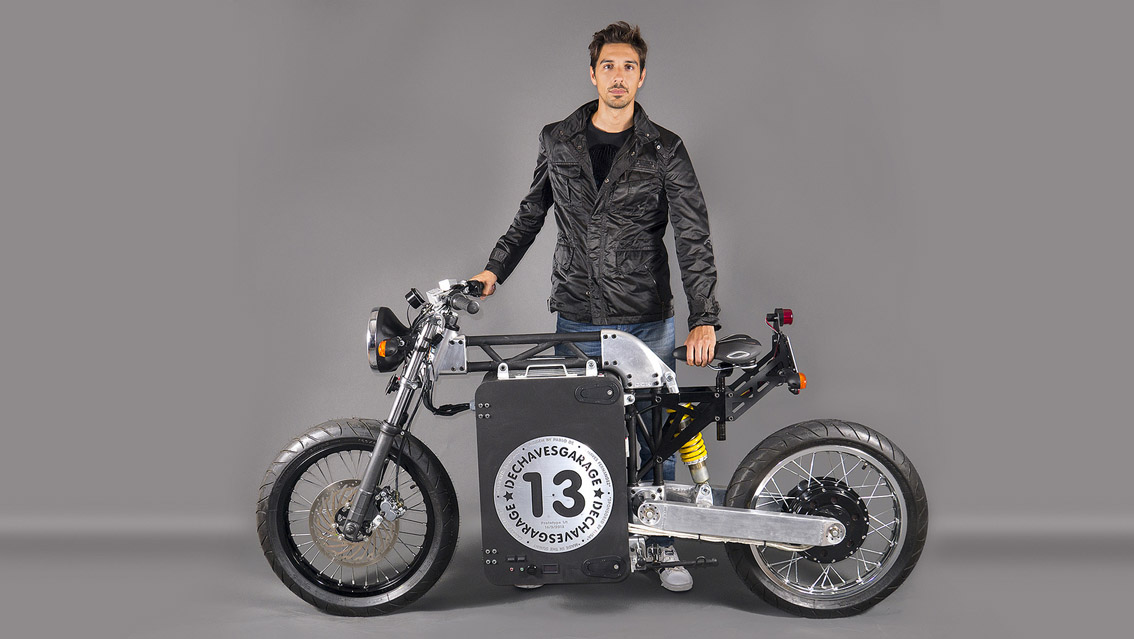
La definizione di minimal credo sia mai come in questo caso azzeccata, la DHC Project del designer Pablo de Chaves (DeChaves Garage) di Tenerife rappresenta l’essenza della moto elettrica naked. Tanto essenziale quanto affascinante nella sua apparente semplicità. Con le componenti elettriche (batterie) ed elettroniche (sistemi di controllo) concentrate nella “black box” centrale e il motore incorporato nella ruota posteriore mi torna alla mente un passaggio del libro di John MaedaLaws of Simplicity” in cui parlando del design di alcuni device si citava il principio S.H.E. (shrink, hide, embody = riduci, nascondi, incorpora). La struttura portante è quanto mai in vista, e nel caso di questo prototipo non è stata solo progettata ma anche costruita da De Chaves! L’idea era di creare un mezzo facile da assemblare e a zero emissioni. Per certi aspetti il risultato finale ha un certo gusto di cafè racer e la totale mancanza di sovrastrutture invece di dare un’impressione di povertà trasmette un’immediata idea di tecnica e razionalità. Potrà non piacere a tutti ma di certo il risultato finale è notevole e certamente non lascerà indifferenti.
dch_drawings
The definition of minimal I think it is never as apt in this case, the DHC Project by designer Pablo de Chaves (DeChaves Garage) located in Tenerife is the essence of the electric naked motorcycle. As essential as fascinating in its apparent simplicity. With electrical components (batteries) and electronic equipment (control systems) concentrated in the central “black box” and the built-in engine into the rear wheel I am reminded of a passage from the John Maeda book “Laws of Simplicity” when talking about devices design the author intriduced the principle SHE (shrink, hide, embody). The supporting structure has a main part in the show, and in the case of this prototype wasn’t only designed but also built by De Chaves! The idea was to create an easy to assemble and zero emissions bike. The final result has some cafe racer taste and the total lack of superstructure instead of giving an impression of poverty conveys an immediate idea of technique and rationality. Maybe it cannot please everyone, but certainly the final result is remarkable and certainly it won’t pass unnoticed.
dch-pablo-de-chaves