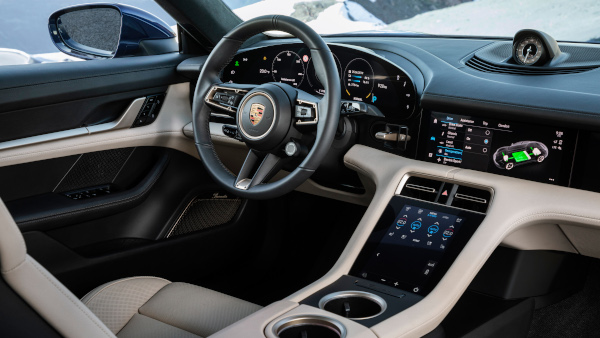
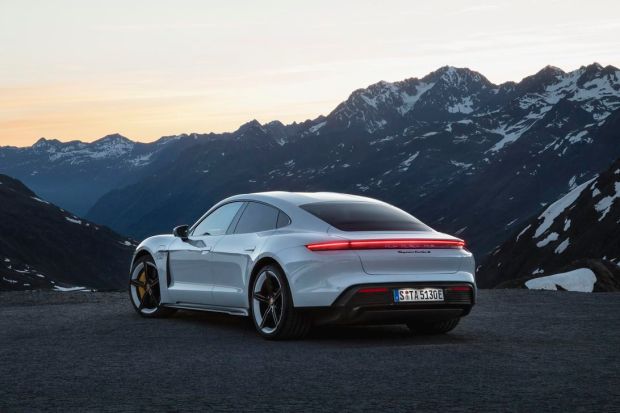
The Fully Charged Show is given exclusive access to get Jonny Smith behind the wheel of the new first Porsche all electric car – the Taycan – and drive it full throttle from 0-124 mph (200 km/h) dozens of times…
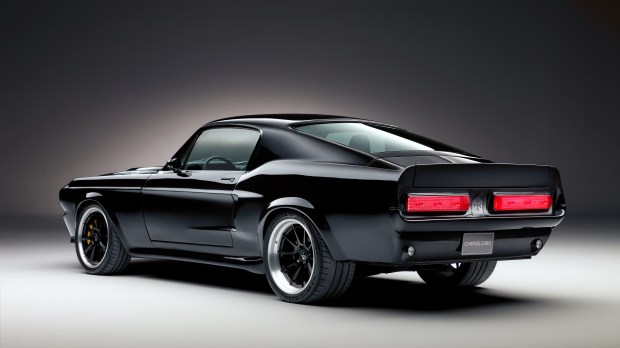
The british company Charge Cars based in London is collecting orders for its crazy brand new electric 60s Mustang fastback, only 499 cars! AWD, 1200Nm torque, 0-60MPH in less than 4 sec. and a… “Burnout MODE” (sec 15 in the company video)!

L’azienda inglese Charge Cars con sede a Londra sta raccogliendo gli ordini per la sua nuovissima Mustang fastback anni 60 elettrica, solo 499 esemplari! 4×4, 1200Nm di coppia, 0-100Km/h in meno di 4 secondi e… la “modalità Burnout” (vedi video a sec 15)!


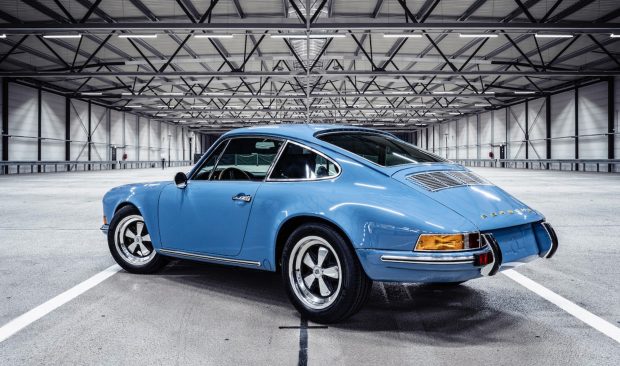
Voitures Extravert based in the Netherlands has developed its all electric powered classic 911: the Quintessenza. They first made just five cars last year that were so appreciated that Voitures has decided to put it into slightly less limited production of 36 cars. Purists may be perplexed at the idea of chopping up a rare 60s 911 so they can rest tranquil knowing that the cars are based on 1980s models that are modified to look like their earlier counterparts. The company completely strips the donor car, rebuild and restore it in key areas. Each car receives an updated power steering system, modern air-conditioning and a redesigned suspension system. The interior keeps much of the original’s switchgear, the most important difference is the digital dashboard, which has fully customizable binnacles. The 58 kWh battery pack provides a range of 250 mile and is capable of adding 60 miles of range in just 15 minutes with a fast charger. The car has 222HP and covers 0-60mph in less than 6 seconds, top speed at 112MPH. Voitures Extravert offers the ‘60s -styled SE or the ‘80s-look TE models in all original paint colors. Both start at $270,000 before taxes (including the donor car) and can be reserved with a $5600 deposit.

Voitures Extravert con sede nei Paesi Bassi ha sviluppato la sua 911 classica completamente elettrica: la Quintessenza. L’anno scorso hanno realizzato solo cinque auto che sono state così apprezzate che Voitures ha deciso farne una produzione leggermente meno limitata di 36 auto. I puristi potrebbero essere perplessi all’idea di tagliare una rara 911 degli anni ’60 ma possono riposare tranquilli sapendo che le auto sono basate su modelli degli anni ’80 che sono stati modificati per assomigliare alle loro più anziane controparti. L’azienda smonta completamente la macchina donatrice, la ricostruisce e la ripristina nei punti chiave. Ogni vettura riceve un sistema di servosterzo aggiornato, una moderna aria condizionata e un sistema di sospensioni ridisegnato. L’interno conserva gran parte degli strumenti originali, la differenza più importante è il cruscotto digitale, che ha quadranti completamente personalizzabili. Il pacco batterie da 58 kWh offre un’autonomia di poco superiore ai 400Km ed è in grado di aggiungere 96Km di autonomia in soli 15 minuti con un caricabatterie rapido. L’auto ha 222 CV e copre lo 0-100Km/h in meno di 6 secondi, velocità massima a 180Km/h. Voitures Extravert offre i modelli SE con look anni ’60 o TE in stile anni ’80 in tutti i colori originali. Entrambi partono da circa 240000 Euro esentasse (compresa l’auto donatrice) e possono essere prenotati con un anticipo di circa 5000 Euro.

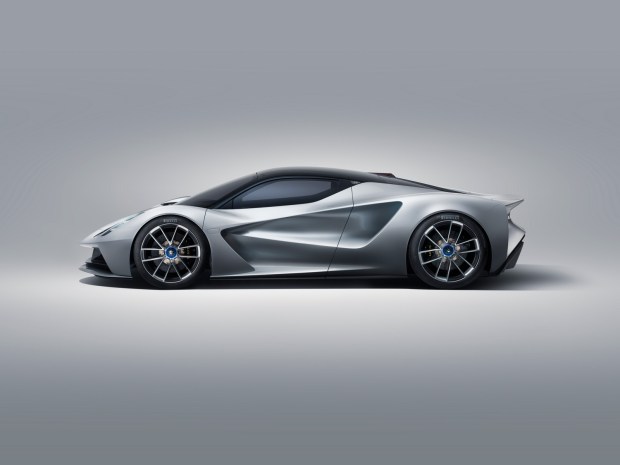
Something totally new from Lotus, the british sports car maker unveiled it’s first full electric hypercar developed under the new owner Geely group (also owner of Volvo): the impressive Evija. This pure beast has 1972HP thanks to four electric motors, one for each wheel. It will have a top speed of over 200 MPH and can cover the 0-60 MPH in less than 3 seconds. Lotus is targeting a range of 250 miles. Lotus also says the car can be charged to 80% from zero in just 12 minutes on 350kW chargers (like the Volkswagen’s Electrify America network), with a full charge in 18 minutes and when 800kW charging becomes available, Lotus says a full charge will take just 9 minutes! Only 130 units will be built, and the price will start at $1.86 million, production will start in 2020.

Qualcosa di totalmente nuovo da parte di Lotus, il produttore britannico di auto sportive ha svelato la sua prima hypercar completamente elettrica sviluppata sotto il nuovo proprietario il gruppo Geely (proprietario anche di Volvo): l’impressionante Evija. Questa autentica belva vanta 1972CV grazie a quattro motori elettrici, uno per ogni ruota. Avrà una velocità massima di oltre 320 Km/h e può coprire 0-100 in meno di 3 secondi. Lotus punta a un’autonomia di circa 400 Km. La casa madre dice anche che l’auto può essere caricata all’80% da zero in soli 12 minuti con caricabatterie da 350kW (come la rete Electrify America di Volkswagen), con una carica completa in 18 minuti e quando la ricarica di 800kW diventerà disponibile, Lotus afferma che una ricarica completa richiederà solo 9 minuti! Verranno costruiti solo 130 esemplari e il prezzo di partenza sarà di circa 1,7 milioni di euro, la produzione inizierà nel 2020.


The EV sedan One, from Lightyear company based in Helmond (NL), aims to reduce the problem of relying on the outlet for charging by covering the roof and hood with advanced solar cells. These cells can operate independently of one another, meaning that if part of the car is in the shade, the part in the sun will generate electricity to power the car. Plug-in charging is going to be the main source of energy, the Lightyear One can charge around 217 miles from a European 230V outlet overnight, or 354 miles in 1 hour with the fast-charging system. Total range with a full charge is over 450 miles, with the potential to go even further depending on the solar cells. Lightyear is taking orders for the One now, with a production run of 500 cars and a delivery date of 2021. More info: Lightyear.one

La berlina elettrica One, della società Lightyear con sede a Helmond (NL), mira a ridurre il problema di affidarsi alla presa per la ricarica coprendo il tetto e il cofano con celle solari di tipo avanzato. Queste celle possono funzionare indipendentemente l’una dall’altra, il che significa che se parte della macchina è all’ombra, la parte al sole genererà elettricità per alimentare l’auto. La ricarica plug-in sarà la principale fonte di energia, la Lightyear One può caricare circa 350 Km da una presa europea a 230V durante la notte o 570 Km in un’ora con il sistema di ricarica rapida. L’autonomia totale con una carica completa è oltre 720 Km, con la possibilità di andare ancora più lontano a seconda del supporto delle celle solari. Lightyear sta accettando gli ordini per la One ora, con una produzione di 500 macchine e una data di consegna del 2021. Ulteriori informazioni: Lightyear.one

The Halo bike is a prototype built by Damon Motorcycles based in Vancouver, Damon is a leading two-wheel technology company that employs radical innovations in sensor fusion, robotics and AI to expand the reach of a rider’s senses in 360º and deliver enhanced situational awareness. Halo is intended as a technology demonstration platform for: electrification, connectivity and AI (sensors for road safety). Damon’s Advanced Warning System for Motorcycles (AWSM™) understands unprotected conditions and specific vehicle dynamics of motorcycles that add to a rider’s vulnerability. Damon’s forward, side and rear detection algorithms inter-communicate to form a complete 360º ‘birds’ eye’ view of what’s happening around the motorcycle at all times. At Damon algorithms are tested over thousands of virtual and real-world miles before a motorcycle can detect and anticipate accidents on all sides of the rider in all environmental conditions. With cellular connectivity, possible collision scenarios are recorded. The data is then sent automatically to a dedicated cloud platform where a sophisticated AI engine continually learns and updates algorithms. For more info visit: damonxlabs.com

La moto Halo è un prototipo costruito dalla Damon Motorcycles con sede a Vancouver, Damon è un’azienda leader nel settore delle tecnologie a due ruote che impiega innovazioni radicali nella fusione di sensori, robotica e intelligenza artificiale per ampliare l’ampiezza dei sensi di un motociclista a 360º e fornire una maggiore consapevolezza della situazione. Halo è intesa come una piattaforma di dimostrazione tecnologica per: elettrificazione, connettività e intelligenza artificiale (sensori per la sicurezza stradale). L’Advanced Warning System for Motorcycles (AWSM ™) della Damon coglie le condizioni non protezione e le dinamiche specifiche dei veicoli che aumentano la vulnerabilità del biker. Gli algoritmi di rilevamento anteriore, laterale e posteriore di Damon comunicano tra loro in modo da formare una vista a 360 ° “a volo d’uccello” di ciò che accade intorno alla motocicletta in ogni momento. Gli algoritmi di Damon sono testati su migliaia di miglia sia virtuali che nel mondo reale prima che una motocicletta possa rilevare e anticipare incidenti su tutti i lati del pilota in tutte le condizioni ambientali. Con la connettività cellulare, vengono registrati possibili scenari di collisione. I dati vengono quindi inviati automaticamente a una piattaforma cloud dedicata in cui un sofisticato motore di intelligenza artificiale impara e aggiorna continuamente gli algoritmi. Per maggiori informazioni visita: damonxlabs.com
After a Porsche 911 Targa and a Range Rover they did it again: guys at Electric Classic Cars in the UK converted an iconic Ferrari 308 gts. Tesla batteries and more than twice the power of the original engine. The finished car is a real fury.
Dopo una Porsche 911 Targa e una Range Rover lo hanno fatto ancora: i ragazzi di Electric Classic Cars in Inghilterra hanno convertito un’iconica Ferrari 308 gts. Batterie Tesla e più del doppio della potenza del motore orginale. L’auto finita è una vera furia.

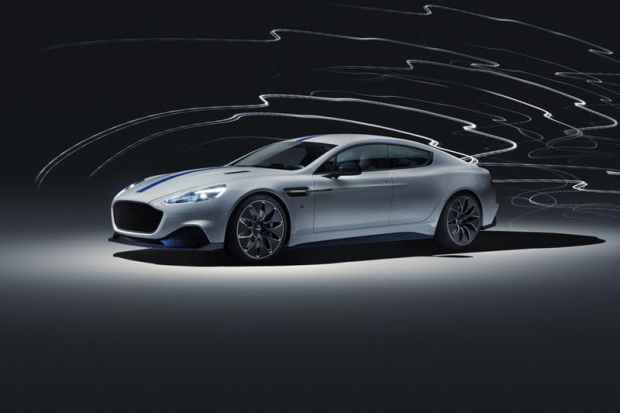
Aston Martin unveiled at the 2019 Shanghai Auto Show the “Rapide E” the new large all-electric saloon. Developed in partnership with Williams Advanced Engineering, the 65kWh battery pack sits in the front where the V12 does in the standard Rapide. It manages to send 601HP to the two motors at the rear. This allows the Rapide E to cover 0-60 under 4 seconds and to have 155MPH top speed. It has a range of over 200 miles and using a fast charger, it will fill its batteries in less than an hour. Using a standard charger however, it will take a bit longer with a reported charging rate of 185 miles an hour. The Rapide E will only be made in 155 examples and will be the next James Bond car.

Aston Martin ha presentato al Salone dell’Auto di Shanghai 2019 la “Rapide E”, la nuova grande berlina elettrica. Sviluppato in collaborazione con Williams Advanced Engineering, il pacco batterie da 65kWh si trova nella parte anteriore dove di solito si trova il V12 delle Rapide standard questo permette ai due motori nella parte posteriore di sviluppare 601CV. Questo permette alla Rapide E di coprire 0-100 in meno di 4 secondi e di avere una velocità massima di 250Km/h. Ha un’autonomia di oltre 300 Km e, grazie a un caricabatterie veloce, riporta al 100% la carica in meno di un’ora. Tuttavia, utilizzando un caricabatterie standard, ci vorrà un po’ di più. Il Rapide E sarà realizzata in soli 155 esemplari e sarà la prossima auto di James Bond.

During the last Geneva Motor Show SEAT presented its electric car prototype, the el-Born, an interesting MPV based on the Volkswagen Group’s MEB platform. The appearance of the car seems very close to the production car. The el-Born combines electrification, autonomous driving and connectivity and will arrive on the market in 2020, will be produced at the same plant in Zwickau (Germany) from which the VW ID will come out. Underneath the sporty MPV body, which incorporates some distinctive features of the brand, the car offers a powertrain with a 150 kW (204 HP) engine, capable of pushing the car 0-100 Km/h in 7.5 seconds. The declared range is 420 Km (with WLTP cycle), thanks to the 62 kWh high density battery. Inside, rationality reigns, with a linear and clean cockpit oriented towards the driver, with a 10” infotainment screen and digital instrumentation. Space is guaranteed: it is possible to place a bag between the two front seats. Seat el-Born can count on driver assistance systems that allow it to meet the criteria of autonomous level 2 driving (the car can intervene autonomously on steering, accelerator and brake, as well as parking alone).

Durante l’ultimo Salone di Ginevra SEAT ha presentato il suo prototipo di autovettura elettrica, la el-Born, una interessante MPV sulla base della piattaforma MEB del gruppo Volkswagen. L’aspetto della vettura pare molto vicino a quella che poi sarà la vettura definitiva. La el-Born unisce elettrificazione, guida autonoma e connettività e arriverà sul mercato nel 2020, sarà prodotta nello stesso stabilimento di Zwickau in Germania da cui uscirà la VW ID. Sotto alla carrozzeria da monovolume sportiva, che riprende alcuni tratti distintivi del marchio, la vettura propone un powertrain con motore da 150 kW (204 CV), in grado di spingere la vettura a 100 Km/h da ferma in 7,5 secondi. L’autonomia dichiarata è di 420 Km (con ciclo WLTP), grazie alla batteria ad alta densità energetica da 62 kWh. Dentro regna la razionalità, con una plancia lineare e pulita orientata verso il guidatore, con schermo dell’infotainment da 10 pollici e strumentazione digitale. Lo spazio è garantito: tra i due sedili anteriori, infatti, è possibile sistemare una borsa. Seat el-Born può contare su sistemi di assistenza alla guida che le permettono di rispondere ai criteri della guida autonoma di livello 2 (l’auto può intervenire autonomamente su sterzo, acceleratore e freno, oltre a parcheggiare da sola).


The Energica Ego seems to have finally found a valid competitor: the Lightning Strike. The Strike is the “possible” sister of the exaggerated LS-218 and will be offered in 3 versions. The Standard with the new liquid-cooled AC induction motor with 88HP and 10 kWh battery with a range of about 160 Km and an on-board charger that can be connected to public or domestic chargers, the Strike Mid can cover about 240 Km thanks to the 15 kWh battery and the Strike Carbon with 320 Km range and maximum power that goes up to 117HP with 20 kWh batteries and fast charge function. The prices (currently only for the US market) are democratic: $ 12,000 for the base, the Mid $ 16,000 and the Carbon $ 20,000. It seems possible to have it in Europe in the second half of 2019.
La Energica Ego pare aver finalmente trovato una valida concorrente: la Lightning Strike. La Strike è la sorella “possibile” della esagerata LS-218 e sarà proposta in 3 versioni. La Standard con il nuovo motore a induzione AC raffreddato a liquido con 88 CV e batteria da 10 kWh con un’autonomia di circa 160 km e un caricatore a bordo che può essere collegato a caricabatterie pubblici o domestici, la Strike Mid in grado di coprire circa 240 km grazie alla batteria da 15 kWh e la Strike Carbon con 320 km di autonomia e potenza massima che sale fino a 117 cv con batterie da 20 kWh e funzione di ricarica rapida. I prezzi (al momento solo per il mercato USA) sono democratici: 12.000 dollari per la base, la Mid 16.000 dollari e la top di gamma Carbon 20.000 dollari. Pare sarà possibile averla in Europa nella seconda metà del 2019.