zero emission

Vanda Dendrobium: electroshocking and fast

vanda_dendrobium_01

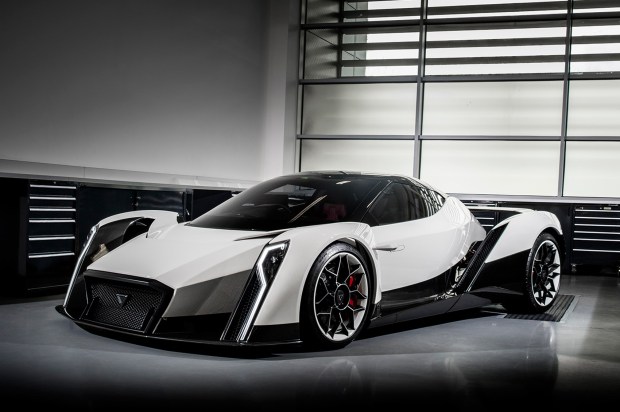
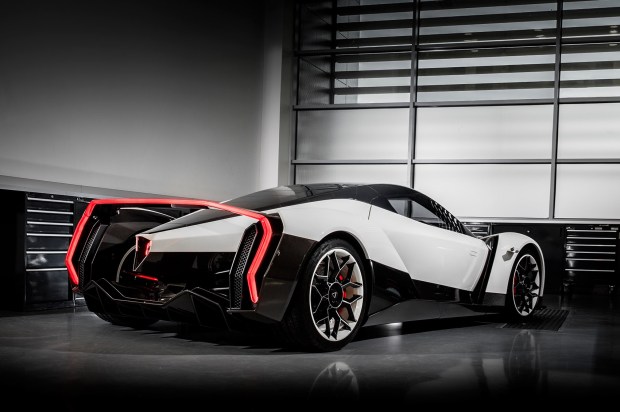
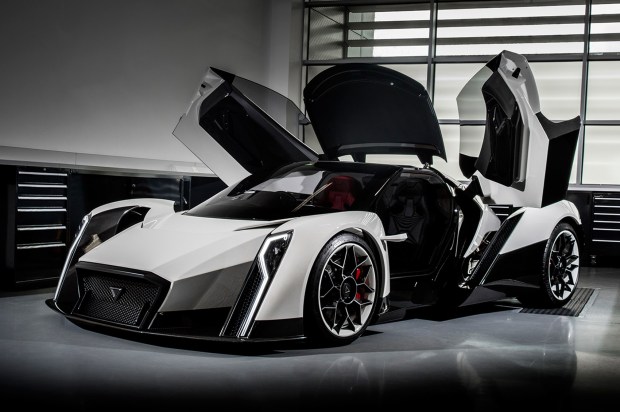
La Dendrobium a due posti con tetto “a petali” è il prodotto della Williams Advanced Engineering (WAE), con sede a Grove (UK), i cui ingegneri hanno passato il 2016 a trasformare gli schizzi di progettazione in un prototipo finemente rifinito. Le porte posteriori e il tetto conferiscono alla supercar il suo nome; La loro forma “a petali” simile all’orchidea Vanda, fiore nazionale di Singapore. Il dendrobio è un genere di orchidee. Secondo Larissa Tan, il capo di Vanda Electrics, il prossimo passo è quello di predisporre la Dendrobium per una produzione limitata “di decine, piuttosto che centinaia”. La produzione è prevista iniziare entro il 2019. Il direttore dei programmi di WAE, Ian Cluett, che guida il progetto, ha costruito l’automobile fino ad essere marciante. I dettagli completi sull’unità elettrica non sono stati rivelati ma, per raggiungere i 200mph, la Dendrobium avrà bisogno di più di 700HP, trazione integrale, un cambio a due velocità e probabilmente tre motori elettrici – uno davanti e due al posteriore. La vettura demo dinamica presenta un singolo motore e una batteria agli ioni di litio derivanti dalla configurazione di Formula E che WAE ha progettato per la categoria corse. La WAE ha affrontato una serie di sfide difficili con il design della Dendrobium, che presenta una sezione centrale a forma di lacrima, componenti di sospensione posteriori esposti e un’apertura unica per tetto e porte. Mantemere le portiere e il leggerissimo tetto chiuso a 200mph sarà una grossa sfida ingegneristica per WAE. La Dendrobium non è ancora stata nella galleria del vento, ma Cluett ha dichiarato che il suo comportamento è stato definito al computer. La carrozzeria posteriore conica lascia ancora spazio per un pacco batteria. Non è possibile mettere la batteria tra le ruote, come sulle Tesla, perché ciò alzerebbe il centro di gravità è quindi probabile che si tratterà di una batteria relativamente piccola da 30-50kWh, piuttosto che da 80-100kWh come sulla Model S. Il gruppo motori sarà impostato per raggiungere i due obiettivi principali del progetto: 200mph di velocità massima e 0-60mph in 2.7sec.
vanda_dendrobium_03

The two-seat ‘petal-roofed’ Dendrobium is the product of Grove-based Williams Advanced Engineering (WAE), whose engineers spent 2016 turning design sketches into the neatly finished concept. The rear-hinging doors and roof lend the supercar its name; their ‘petal-like’ shape mimicking the Vanda orchid, Singapore’s national flower. Dendrobium is an orchid genus. According to Larissa Tan, the boss of Vanda Electrics, the next step is to engineer the Dendrobium for limited production “in the tens, rather than the hundreds”. Production is planned to kick off by 2019. WAE head of programmes Ian Cluett, who is leading the project, had the car built to a running standard. Full details of the electric power train have not been revealed but, to hit 200mph, the Dendrobium will need more than 700bhp, four-wheel drive, a two-speed gearbox and most likely three electric motors — one at the front and two at the rear. The ‘dynamic demonstrator’ features a single motor and a lithium ion battery pack derived from the Formula E set-up that WAE designed for the race series. WAE has been set a number of tough challenges by the Dendrobium’s design, which features a teardrop-shaped centre section, exposed rear suspension components and unique roof/door opening. Locking the doors and lightweight roof shut at 200mph will be a considerable engineering challenge for WAE. The Dendrobium hasn’t been in the wind tunnel yet, but Cluett said its behaviour has been computer-modelled. The tapering rear bodywork also leaves little volume for a battery pack. WAE can’t package the battery between the wheels, Tesla-style, because that would push the centre of gravity too high. As a result, it is likely to feature a relatively small battery pack of 30-50kWh, rather than the 80-100kWh of the Tesla Model S. The power train will be tuned to deliver the project’s two main targets: 200mph and 0-60mph in 2.7sec.  (source www.autocar.co.uk)
vanda_dendrobium_02

Cummins Aeos: truck from the future

cummins-aeos-electric-tractor

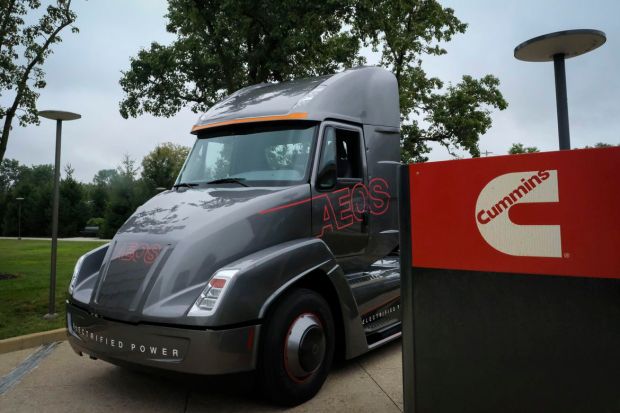
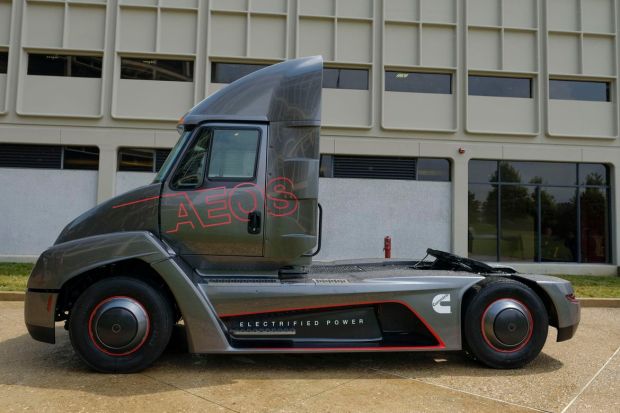
Cummins, the giant of engines, has recently presented its own electric semi tractor, as reported by Road Show headline. The concept of Urban Hauler Tractor, also called AEOS shown at its Columbus Technical Center (USA). Few technical information given, except the presence of a 140 kWh battery, which allows an autonomy of about 160 kilometers that can be extended up to 480 km installing some additional batteries. It is therefore a vehicle that is more suitable for city transports, unlike the truck coming soon from Tesla for which it speaks of a basic autonomy between 320 and 480 km. Charging the Cummins AEOS is fast, it will take an hour to recover the full power, and the start of production is expected by 2019. It’s time to see what Elon Musk’s proposal will be.

cummins-aeos_2Cummins, gigante dei motori, ha presentato nei giorni scorsi la propria motrice elettrica per autotreni, come riportato dalla testata Road Show. Si tratta del concept Urban Hauler Tractor, denominato anche AEOS esposto presso il suo centro tecnico di Columbus (USA). Poche le informazioni tecniche diffuse, se non la presenza di una batteria da 140 kWh, che permette un’autonomia di circa 160 chilometri che si può estendere fino a 480 km installando alcune batterie aggiuntive. Si tratta quindi di una motrice più adatta a spostamenti cittadini o comunque abbastanza brevi, a differenza della motrice in studio da Tesla per cui si parla di un’autonomia base compresa tra 320 e 480 km. La ricarica del Cummins AEOS è veloce, servirà un’ora per recuperare l’energia completa, e l’inizio della produzione di serie è attesa per il 2019. Ora resta da vedere quale sarà la proposta di Elon Musk.

Kreisel Evex 910e: electric racer

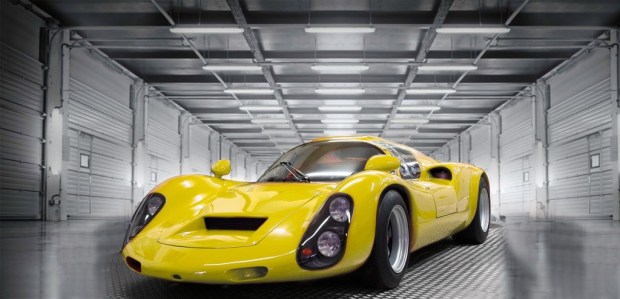
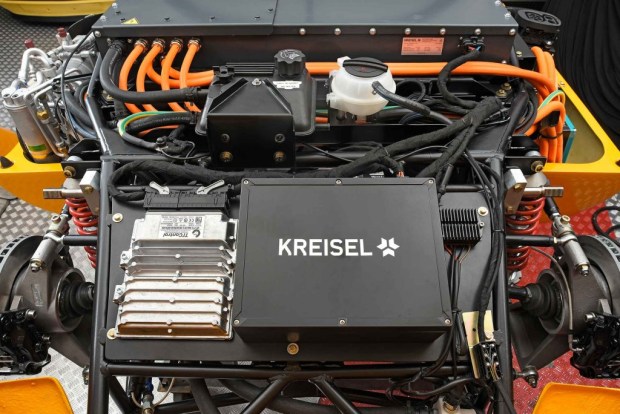
Kreisel Evex 910e_2Una leggenda delle competizioni trasformata in ecologica super sportiva? Kreisel l’ha fatto, elettrificando un’icona del motorsport: la Porsche 910, automobile che corse in molte competizioni, tra cui alcune edizioni della 24 Ore di Le Mans a fine anni sessanta. In verità non si tratta di un’autentica Porsche 910, Kreisel ha lavorato con la Evex, una marca specializzata nella riproduzione accurata di auto storiche, il risultato è la Kreisel Evex 910e. Questa sportiva elettrica sarà prodotta in 35 esemplari, con un prezzo superiore al milione di euro. Vista la derivazione della sportiva, questa replica elettrica ha prestazioni elevatissime. Il motore eroga 490CV ed è alimentato da una batteria agli ioni di litio da 53 kWh che permette 350km d’autonomia. L’auto pesa solo 1.100 chilogrammi e riesce a scattare da 0 a 100 chilometri all’ora in soli 2.5 secondi.

Kreisel Evex 910e_1.jpgA legend of the competition turned into a green supersports? Kreisel did it, electrifying an icon of motorsport: the Porsche 910, car raced in many competitions, including some 24 Hours of Le Mans editions at the end of the 60s. The car isn’t a real Porsche 910, Kreisel worked with Evex, a brand specialized in vintage cars replicas, the result is the Kreisel Evex 910e. This electric sports car will be produced in 35 units, with a over a million euro price tag. Considering the sport heritage this car is very powerful. The engine delivers 490CV and is powered by a 53 kWh  lithium-ion battery which allows 350km range. The car weighs only 1.100 kilograms and is able to sprint from 0 to 100km/h in just 2.5 seconds.

Kreisel Evex 910e_3

Italian Volt Lacama: electric custom

ItalianVolt_Lacama

Presented a few days ago the new Italian Volt Lacama, the first fully customizable Italian electric motorcycle. Covers the 0-100km/h in 4.6 seconds, it has a range of about 180km, a top speed (electronically limited) of 180 km/h, retrieves up to 80% capacity in just 40 minutes and 100% charging from standard power line in 3 hours. The 35,000 euros price tag puts this technological gem among ultimate status symbol for fine palates and good wallet. Produced only on demand, Lacama offers the possibility to combine the 12 pieces of body in five different designs and different colors, using 3D printing. Keeping the same basic structure, which has top components, such as brakes Brembo and Ohlins suspension. Weight is the only limit: the Italian Volt naked weighs 250kg. A figure which however does not limit the performance thanks to the 95HP electric motor.


Presentata alcuni giorni fa la nuova Italian Volt Lacama, la prima moto elettrica italiana completamente personalizzabile. Copre lo 0-100km/h in 4,6 secondi, ha un’autonomia di circa 180km, raggiunge una velocità massima (autolimitata) di 180 km/h, recupera fino all’80% della carica in soli 40 minuti e in 3 ore si carica completamente da rete standard. Il listino previsto di 35.000 euro la colloca questo gioiello tecnologico tra gli status symbol per palati fini e portafolgi in salute. Prodotta solo su ordinazione, Lacama offre la possibilità di combinare a piacimento le 12 parti delle sovrastrutture, in cinque varianti di design e differenti colori, sfruttando la stampa 3D. Ferma restando la struttura base, che conta componenti di prim’ordine, come i freni Brembo e le sospensioni della Ohlins. Unico limite il peso: la naked sportiva Italian Volt pesa infatti 250kg. Un dato che comunque non limita le performance grazie alla potenza di 95 CV del motore elettrico.

Alta Motors Dirt Tracker Concept

altamotor_dirt

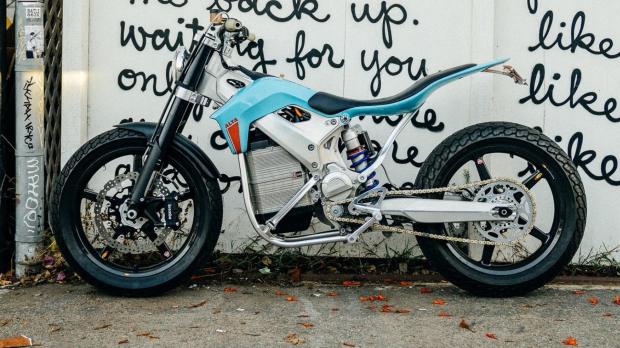
Concepita dalla start-up di moto elettriche Alta Motors fondata nel 2007, che è riuscita a raccogliere oltre 17 milioni di dollari dai finanziatori (tra questi i co-fondatori di Tesla, Marc Tarpenning e Martin Eberhard), la concept Dirt Tracker è un piccolo gioiello che molto farà discutere. Il motore elettrico secondo le prime informazioni trapelate dovrebbe avere l’equivalente di 40 cavalli, 162 Nm e un’autonomia di almeno 80 km, il pacco batterie dovrebbe essere da 5,8kWh, con un ciclo di ricarica di due ore e mezza da rete a 220V. La moto dovrebbe debuttare il 10 febbraio al The One Moto Show di Portland. Pur essendo ancora una concept, il team di Alta Motors non ha badato a spese per i componenti: i cerchi ruota sono preziosi BSR in fibra di carbonio da 19″ mentre le sospensioni sono della White Power, di gran classe anche la pinza freno Brembo con attacco radiale all’anteriore. Un gioiello tecnologico ed ecologico che permette di muoversi con stile nella giungla d’asfalto di tutti i giorni.


Conceived by the young start-up of electric motorcycles Alta Motors, which raised more than $17 million from contributors (including the Tesla co-founders, Marc Tarpenning and Martin Eberhard), the Dirt Tracker concept is a little gem that will be on people mouth. The electric motor, according to the first leaked information, should have the equivalent of 40HP, 162 Nm and a range of at least 80 km, the battery pack should be 5.8kWh, with a charging cycle of two hours and a half from 220V outlet. The bike should debut Feb. 10 at the One Moto Show in Portland. Although still a concept, the Alta Motors team has spared no expense for the components: the wheel rims are valuable BSR carbon fiber 19″ while the suspensions are provided by White Power, top class Brembo brake caliper with front lower mount. A technological and ecological jewel to go around in style in the everyday asphalt jungle.

DeLorean MARTY project

15773-car_marty_banner

Gli ingegneri di Stanford hanno costruito una DeLorean a guida autonoma in grado di eseguire drifting stabile e preciso, con ampi angoli, al fine di studiare come le automobili gestiscono situazioni estreme per poter poi arrivare allo sviluppo di protocolli di sicurezza autonomi. I partner Revs Program di Stanford e Renovo Motors hanno quindi presentato l’ultima aggiunta alla flotta di ricerca di Stanford. Soprannominato MARTY – acronimo di “Multiple Actuator Research Test bed for Yaw control” (Attuatore multiplo di ricerca per la prova del controllo di imbardata) – la vettura è già dimostrando di essere un ottimo veicolo per la ricerca da parte degli studenti. Oltre a rendere omaggio al film, Ritorno al futuro, il nome MARTY permette di comprendere meglio i tipi di ricerca da effettuare da parte del team, che è stata determinata principalmente da Jonathan Goh, uno studente laureato in ingegneria meccanica nel Dynamic Design Lab (DDL) del prof. Gerdes. Il controllo elettronico della stabilità, o ESC, è ormai una dotazione nella maggior parte delle auto moderne e permette alla macchina di rimanere entro i confini di una gestione stabile, ad esempio, controllando i freni o addirittura tagliando la potenza del motore in caso di necessità. MARTY è stato costruito in collaborazione con Renovo Motors, una start-up automobilistica con sede nella Silicon Valley che si è specializzata nella costruzione di tecnologie avanzate per veicoli elettrici. Lavorando a stretto contatto hanno fornito al team di Stanford l’accesso a una nuova piattaforma derivata dalla supercar elettrica di Renovo che una straordinaria spinta alle ruote posteriori in una frazione di secondo e che consente un controllo preciso delle forze necessarie alla gestione della derapata. Poiché i sistemi sono tutti gestiti da un’unità computerizzata centrale, il processo di integrazione è stato molto rapido e Goh ed i suoi colleghi sono stati in grado di rimettere su strada la macchina pochi mesi dopo aver eliminato il motore termico originale.

(Estratto da http://news.stanford.edu/2015/10/20/marty-autonomous-delorean-102015/ by Bjorn Carey)

Stanford engineers built an autonomous DeLorean capable of stable, precise drifting at large angles in order to study how cars perform in extreme situations, which could ultimately guide the development of autonomous safety protocols. Partners Revs Program at Stanford and Renovo Motors unveiled the latest addition to Stanford’s research fleet. Nicknamed MARTY – short for Multiple Actuator Research Test bed for Yaw control – the car is already proving to be an excellent vehicle for student-driven research. In addition to paying homage to the movie, Back to the Future, the name MARTY provides insight to the types of research to be carried out by the team, which has been driven primarily by Jonathan Goh, a mechanical engineering graduate student in Gerdes’ Dynamic Design Lab (DDL). Electronic stability control, or ESC, is a feature in most modern cars that ensures that the car stays within the boundaries of stable handling by, for example, applying brakes to certain wheels or even cutting engine power when needed. MARTY was built in collaboration with Renovo Motors, an automotive start-up based in Silicon Valley that specializes in building advanced electric vehicle technology. Working closely together gave the Stanford team early access to a brand new platform derived from Renovo’s electric supercar that delivers 4,000 pound-feet from on-motor gearboxes to the rear wheels in a fraction of a second – allowing precise control of the forces required to drift. Because the systems are all managed by a central API, the integration process was very rapid and Goh and his colleagues were able to get the car back on the road just a few months after pulling the original gasoline engine.

(from http://news.stanford.edu/2015/10/20/marty-autonomous-delorean-102015/ by Bjorn Carey)

VW I.D. Buzz: shocking Bully

vwidbuzzconcept

Al Salone di Detroit NAIAS 2017 Volkswagen presenta la I.D. Buzz, una concept basata sul pianale Modular Electric Drive Kit (MEB) della concept I.D. mostrata a Parigi. Il richiamo al mitico pulmino Bully è più che evidente e la I.D. Buzz ne ripropone le doti di polivalenza in chiave moderna. Gli interni si possono configurare in differenti modi. Con un semplice tocco al logo Volkswagen al centro del volante, questo si ritrae automaticamente per fondersi con la plancia, mentre 10 scanner laser, telecamere e sensori radar e a ultrasuoni si attivano per prendere il commando. Naturalmente I.D. Buzz è una concept a emissioni zero, con un’autonomia stimata superiore a 430 km e una potenza massima di 275 kW (ben 374CV!):con due motori elettrici, uno davanti e uno dietro, che forniscono una trazione 4WD. La ricarica dovrebbe essere anche wireless e un’innovativa interfaccia, che fonde realtà aumentata e comandi vocali, agevola l’uso dei sistemi di bordo.


At the Detroit NAIAS 2017 Volkswagen presents the I.D. Buzz, a concept based on the same Modular Electric Drive Kit (MEB) platform of the I.D. concept shown in Paris. The recall to the mythical Bully van is undeniable and the I.D. Buzz recreates the same qualities of versatility in a modern key. The interior can be configured in different ways. With a simple touch to the Volkswagen logo in the center of the steering wheel, this automatically retracts to merge with the dashboard, while 10 laser scanners, cameras and radar sensors and ultrasound are activated for self driving. Of course I.D. Buzz is a zero-emission concept, with a estimated range at more than 430 km and a maximum power of 275kW (374CV!): With two electric motors, one in front and one behind, which provide a 4WD traction. Charging should be wireless, and an innovative interface, which fuses augmented reality and voice controls, facilitates the use of onboard systems.

Armotia Due R & Due X: cool italian ride

8857

When we talk about made in Italy, we must talk about passion, commitment and creativity. When a small company creates something new and ready to give you a glimpse of future, great time in fun and a true vision of cool green mobility you must stand up and give honor to the result. At the last EICMA edition Armotia presented the 2017 line-up with two great fun bikes: Due R and Due X, the first electric 2WD fun-bikes. The DUE-R is a trail bike close to a supermotard ready to give you emotions on road and, why not, off road riding on your favorite tracks with the power of two electric engines: a permanent magnets 3-phase, axial flux in the rear and a permanent magnets 3-phase, radial flux in the front. Characterized by 19″ and 17″ wheels with 110/80 e 140/80 tyres respectively. With a total power of 15HP and 90km/h of top speed and 1 hour and 30 minutes of pure fun. The DUE-X is a off-road bike the has the same engines of its sister but has a hard off-road set up, equipped with a 43mm UPS fork and an OHLINS monoshock. The over dimensioned swingarm and the ergonomics make the bikes stable and amazing to be ridden. For more info vist: ARMOTIA.COM

8759

Quando si parla di Made in Italy, si deve parlare di passione, impegno e creatività. Quando una piccola azienda crea qualcosa di nuovo pronto a darvi un assaggio del futuro, grandi momenti di divertimento e una vera e propria visione della migliore mobilità green è necessario alzarsi in piedi e rendere onore al risultato. Alla scorsa edizione di EICMA la Armotia ha presentato la gamma 2017 con due grandi fun-bikes: Due-R e Due-X, le prime fun-bike a due ruote motrici. La DUE-R è una trail bike che si avvicina ad una supermotard pronta a darvi emozioni su strada e, perché no, anche fuori strada sui vostri percorsi preferiti con la potenza di due motori elettrici: a magneti permanenti a 3 fasi, flusso assiale nel posteriore e una magneti permanenti 3 fasi, flusso radiale nella parte anteriore. Caratterizzato da cerchi da 19″e 17″ con pneumatici 110/80 e 140/80 rispettivamente. Con una potenza totale di 15CV e 90 km/h di velocità massima e 1 ora e 30 minuti di puro divertimento. La DUE-X è una moto off-road che sfrutta gli stessi motori della sorella, ma impostata per del vero fuoristrada, dotata di una forcella UPS da 43 millimetri e di un monoammortizzatore OHLINS. Il forcellone sovradimensionato e l’ergonomia rendono le moto stabili e sorprendenti nella guida. Per maggiori informazioni vistate: ARMOTIA.COM

8814

8804

NextEV NIO EP9: fast green future

nioep9

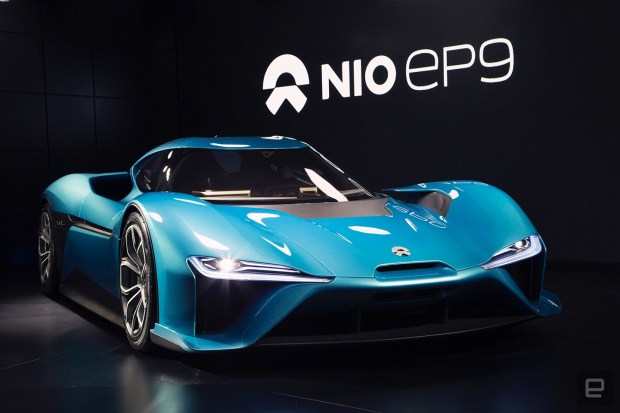
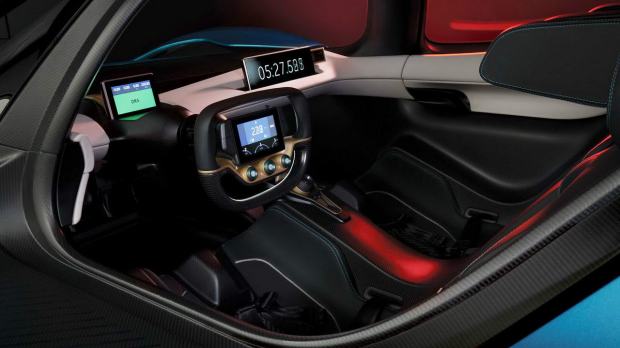
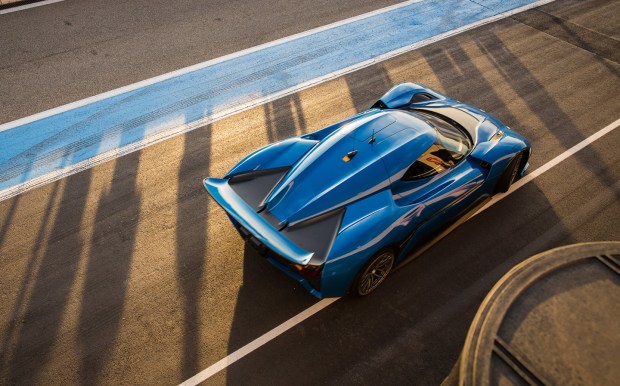
Chinese electric car start-up NextEV has launched a new sub-brand, called NIO, and its first car will be the EP9 an electric four-wheel-drive hypercar. Four high-performance motors (one for each wheel) and four individual gearboxes give the EP9 a 777-volt powertrain that develops 1 MW of power, equivalent to an astonishing 1341HP. The means the EP9 can accelerate from 0-200km/h in 7.1 sec. and has a top speed of 313km/h. The electric EP9 can be charged to full in 45 minutes (though its interchangeable battery system could allow the cells to be swapped out in just eight minutes) and it has a claimed range of 427km. A carbon cockpit and chassis aims to cut weight, which is vital because, thanks to that battery supply, at 1735kg the EP9 comes in almost 200kg heavier than a LaFerrari. (credit: www.wired.co.uk)

nioep9_int

La start-up automobilistica cinese NextEV ha lanciato un nuovo marchio chiamato NIO, e la sua prima vettura sarà la EP9 una hypercar quattro ruote motrici elettriche. Quattro motori ad alte prestazioni (uno per ogni ruota) e quattro cambi individuali danno alla EP9 un propulsore da 777 volt che sviluppa 1 MW di potenza, pari al sorprendente valore di 1341CV. Questo significa che la EP9 può accelerare da 0-200km/h in 7.1 secondi e raggiungere una velocità massima di 313 chilometri all’ora. La EP9 elettrico può essere caricata al massimo in 45 minuti (anche se il suo sistema di batterie intercambiabili potrebbe consentire un cambio in soli otto minuti) e ha una percorrenza dichiarata di 427 km. Un abitacolo e il telaio in carbonio permettono di ridurre il peso, dettaglio essenziale per fermare l’ago della bilancia a 1735kg rendendo la EP9 più pesante di una Ferrari LaFerrari di solo 200kg.

nioep9_back

Jaguar I-Pace: stylish, fast and electric

HyperFocal: 0

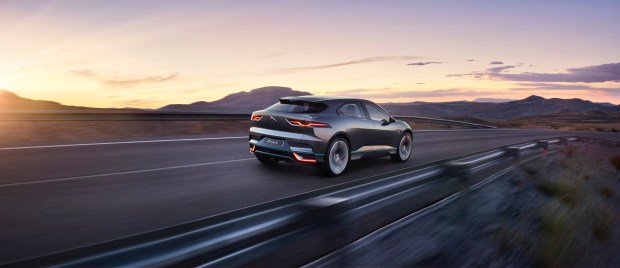
La Jaguar I-Pace è al suo debutto al Salone di Los Angeles e prefigura il primo vero veicolo solo elettrico di Jaguar. La taglia SUV gli permetterà di rivaleggiare con la recente Tesla Model X, anche se con un profilo più slanciato, e questo pare sarà il principio che verrà seguito. La nuova vettura avrà un’autonomia per singola carica di circa 498km, e sarà in grado di accelerare da 0-100km/h in circa quattro secondi, il che significa che sarà rivale delle principali auto sportive. Il sistema 4WD della I-Pace userà una coppia di motori elettrici che produrranno circa 400CV, il tutto alimentato da un pacco batterie agli ioni di litio di 90 kWh. Jaguar dichiera che avrà “una dinamica di guida agile e precisa come ancora non visto su un veicolo elettrico”. Con una iniziativa simile a quella di Tesla con la sua Model3, Jaguar invita i potenziali clienti a segnalare il loro interesse sul sito web. Il SUV Jaguar a cinque posti sarà in vendita nel 2018 – il prezzo è ancora da definire – e si dice per il progetto abbiano lavorato sovvertendo le regole classiche della progettazione per “creare un’architettura elettrica su misura, abbinata ad un design di grande effetto”. Ian Callum, Direttore del Design di Jaguar, ha detto: “L’I-Pace Concept rappresenta la prossima generazione di progettazione dei veicoli elettrici. E’ un design di grande personalità, proiettato nel futuro con un bellissimo interno -. Il frutto del vero DNA Jaguar, tecnologia elettrica e artigianalità contemporanea “Dal punto di vista pratico, Jaguar dice che una carica rapida su un caricabatterie DC 50 KW avrà solo più di due ore, offrendo una gamma di almeno 220 miglia, e fino a 310 miglia. Inoltre, per principio le auto elettriche possano essere realizzate in modo efficiente (le batterie alloggiano nel pavimento della vettura ed i motori elettrici sono molto più piccoli di un motore convenzionale) quindi la I-Pace ha più spazio all’interno del SUV recentemente lanciato, la F- Pace, pur essendo esteriormente più compatto. Inclusi quindi anche 530 litri di spazio per i bagagli nel bagagliaio, e molto di più sotto il cofano anteriore della vettura. Il posizionamento delle batterie nella base della vettura ha il vantaggio di mantenere il baricentro in basso, a tutto vantaggio della maneggevolezza, che suggerisce l’I-Pace dovrebbe incarnare il motto di Jaguar di dinamiche di guida fluide.

HyperFocal: 0

The Jaguar I-Pace is making its debut at the LA motor show and will go on to be Jaguar’s first pure electric vehicle. It will have a SUV body to rival the recently launched Tesla Model X, but with a sleeker profile if this concept is anything to go by. The new car will have a range of 310 miles with a single charge, and will be able to accelerate from 0-62mph in about 4 seconds, meaning it will rival all but the very quickest of sports cars. The AWD I-Pace will use a pair of electric motors that will produce close to 400bhp, all powered by a 90 kWh lithium-ion battery pack. Jaguar boasts that it will have “precise, agile driving dynamics as yet unseen on an electric vehicle”. Similar to Tesla’s initiative with the Model3 electric car, Jaguar is inviting potential customers to register their interest online at its website. Jaguar’s five-seat SUV will go on sale in 2018 – the price is yet to be announced – and is said to have been created as a result of the company’s design and engineering teams tearing up the rule book to “create a bespoke electric architecture, matched with dramatic design”. Ian Callum, Jaguar’s Director of Design, said: “The I-Pace Concept represents the next generation of electric vehicle design. It’s a dramatic, future-facing cab-forward design with a beautiful interior – the product of authentic Jaguar DNA, electric technology and contemporary craftsmanship.” On the practical side, Jaguar says that a rapid charge on a 50 KW DC charger will take just over two hours, delivering a range of at least 220 miles, and as much as 310 miles. In addition, because electric cars can be so efficiently packaged (the batteries sit under the floor of the car and the electric motors are much smaller than a conventional engine) the I-Pace has more room inside than Jaguar’s recently launched SUV, the F-Pace, despite being smaller on the outside. That includes 530 litres of luggage space in the boot, plus more under the bonnet of the car. Placing the batteries in the base of the car has the added benefit of keeping its centre of gravity low, to the benefit of handling, which suggests the I-Pace should live up to Jaguar’s claim of agile driving dynamics.

jaguar_i-pace_concept_int