electric cars

Tesla Roadster 3.0 is coming?

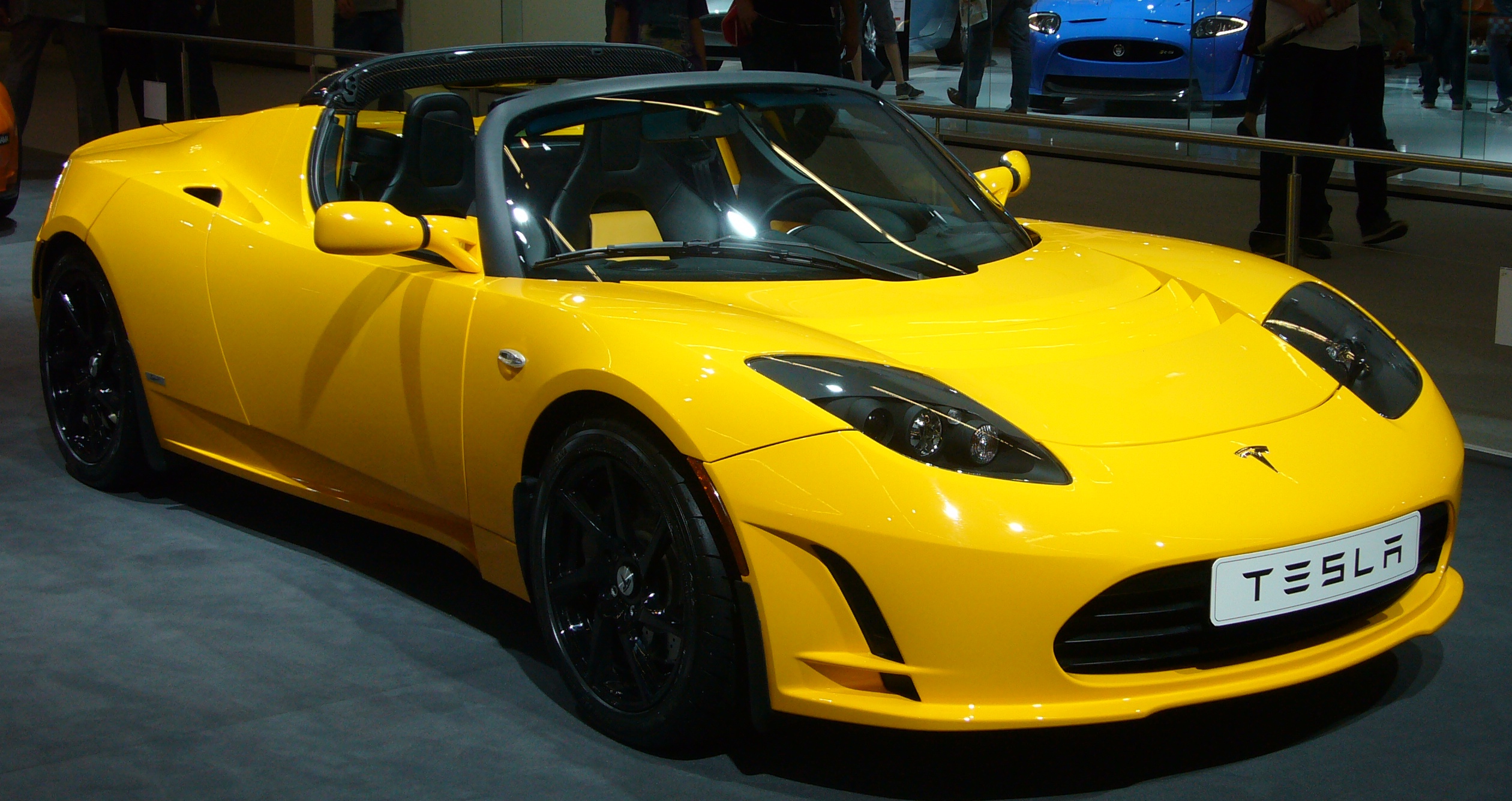
Tesla_Roadster_2.5La Tesla Roadster è stata presentata nel 2008 ed è uscita di produzione nel 2012, ora potrebbe tornare sul mercato in quella che potrebbe essere definita la versione 3.0, affiancandosi alla Model S e alla ormai prossima (?) Model X. Per ora è uno studio, un upgrade che non si sa se verrà offerto come aftermarket o come pack, di certo c’è che la sfida è lanciata: coprire gli oltre 600 km tra Los Angeles e San Francisco senza soste per ricaricare le batterie. Questo rappresenterebbe un grande balzo in avanti, con un aumento dell’autonomia di quasi il 50%, ottenuto concentrandosi su tre punti specifici. Punto primo le batterie: quelle che equipaggiavano la Roadster del 2008 sono state sostituite con una tipologia di ultima generazione in grado di fornire, a parità di peso (450 kg) e dimensioni, ben 70 Kw in più, con un incremento di energia del 31%. Punto secondo, l’aerodinamica: il CX migliorato del 15% da 0.36 a 0.31. Punto terzo il coefficiente di rotolamento degli pneumatici, migliorato del 20%. Il viaggio inaugurale avverrà nelle prime settimane del 2015.


The Tesla Roadster was presented in 2008 and went out of production in 2012, could now return to the market in what could be called version 3.0, alongside the Model S and the forthcoming (?) Model X. For now it is a study, an upgrade that we don’t know if it will be offered as an aftermarket or as a pack, for sure there is the challenge: to drive for 600 km from Los Angeles to San Francisco without stopping to recharge the batteries. This would represent a great leap forward, with an increased range of almost 50%, obtained by focusing on three specific points. First point the batteries: those that equipped the Roadster in 2008 have been replaced with a last generation able to provide, at the same weight (450 kg) and size, up to 70 Kw more, an increase of energy of 31 %. Second point, the aerodynamics: the CX improved by 15% from 0.36 to 0.31. Points third the coefficient of rolling tires, improved by 20%. The challege travel will take place in the first weeks of 2015.

Duke’s Garage ’65 Mustang electric conversion: cool green from the past

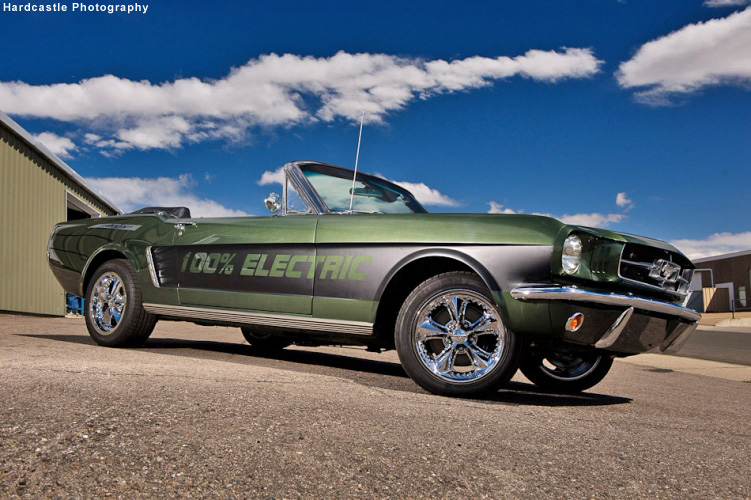
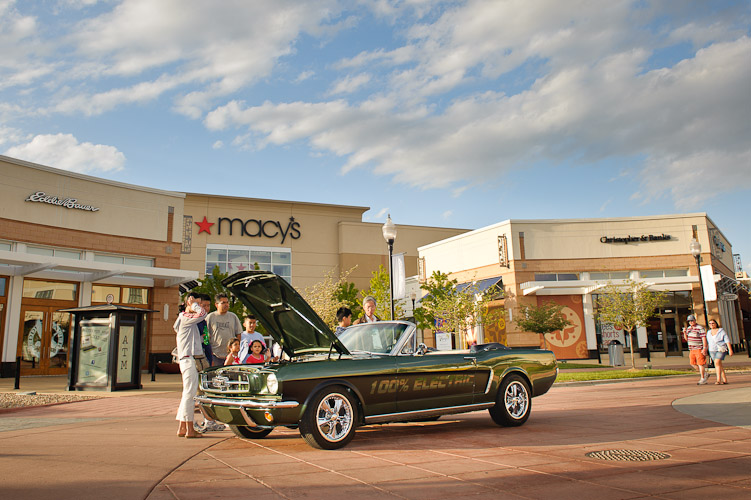
Molte persone amano le “muscle car” classiche; ma se siete preoccupati per l’impatto ambientale, come potete godervi la guida di una di queste auto? Per qualcuno, la risposta potrebbe essere una completa conversione alla trazione elettrica e Duke’s Garage vicino a Denver in Colorado ha creato questa bellissima Mustang “open air” per mostrare le proprie capacità nel fare proprio questo. Questo concessionario specializzato nel restauro di vetture classiche ha preso una Ford Mustang convertibile del 1965 che aveva bisogno di un profondo intervento e l’ha riqualificata nell’aspetto e nel suo impatto ambientale. Ora questa “pony car” è spinta da motori elettrici gemellati alimentati da una batteria agli ioni di litio da 144 volt sotto il cofano. I sedili sono stati rifatti con schiuma riciclata e rivestiti in un elegante tessuto di canapa a spina di pesce con bordature scure, così come i pannelli porta. Finita in verde oliva scuro, ora questa Mustang è verde dentro e fuori e pronta a trasportare i suoi passeggeri in giro con stile con un’autonomia che arriva a circa 96Km. Duke offrirà questo servizio ad un costo tra 15.000 a 20.000 dollari, a seconda della macchina.


Many people love classic muscle cars; but if you’re concerned about your environmental impact, how can anyone enjoy driving one? For someone, the answer may be having a “all-electric power” drivetrain conversion and Duke’s Garage near Denver in Colorado has created this cool open air Mustang to show their abilities to do just that. This classic car dealer and restoration specialist has taken a ’65 Ford Mustang convertible that needed some extensive rebuilding and rehabilitated both its looks and its emissions output. Now the pony car is powered using twinned electric motors supplied with current from a 144 volt lithium ion battery pack under the hood. The seats have been redone using recycled foam and are swathed in a classy hemp herringbone fabric with dark piping, as are the door panels. Finished in a dark olive, now this Mustang is green inside and outside and ready to carry passengers around in style with a up to 60 miles range. Duke’s will offer the service for $15,000 to $20,000, depending on the car.

Electric-Mustang

Zombie 222 by Bloodshed Motors: green muscles

Zombie222_front

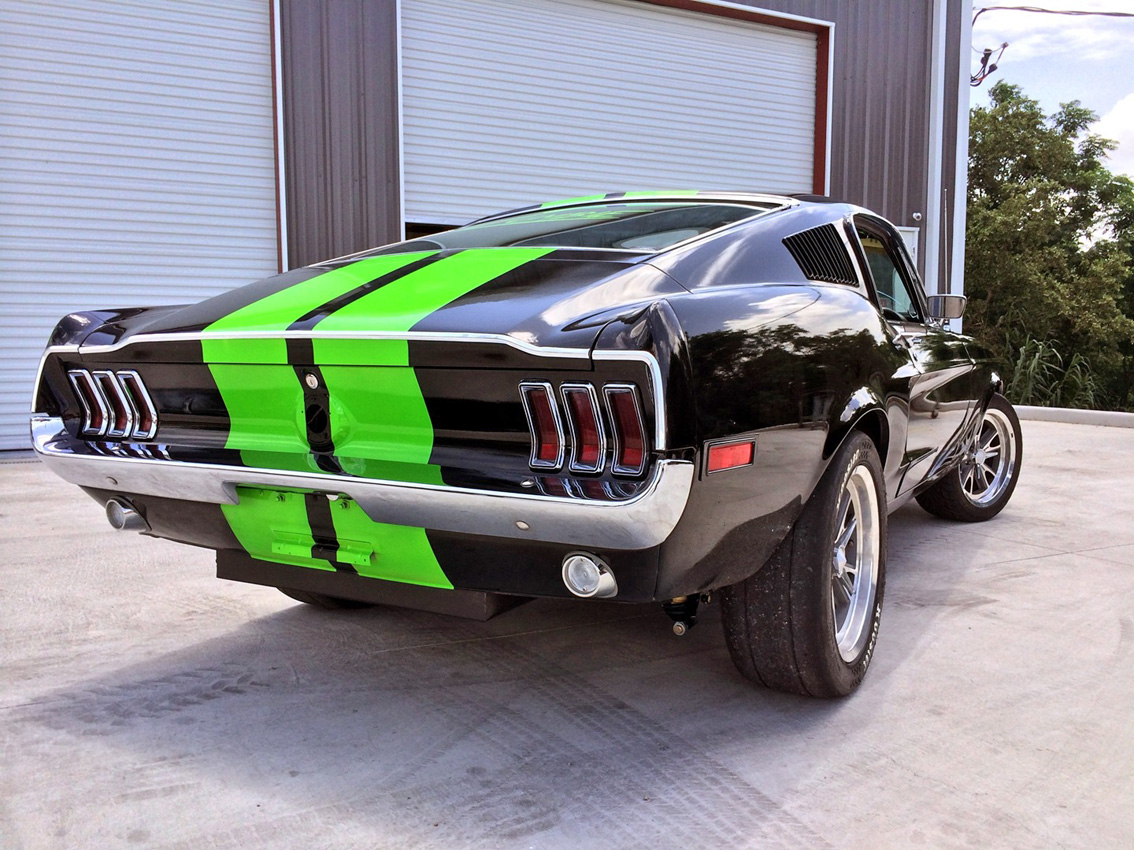
Amate le mitiche muscle car degli anni 60 ma volte avere cura dell’ambiente? I signori della Bloodshed Motors ad Austin (Texas) hanno creato l’auto che fa per voi: la Zombie 222 fusione della moderna tecnologia a trazione elettrica con il corpo vettura di una fantastica Ford Mustang fastback del 1968. Molti grideranno allo scandalo e all’abominio ma numeri alla mano questa moderna reinterpretazione del mito non lascia nessuna nostalgia o rimpianto a parte il brontolio del motore V8. La Zombie 222 infatti monta una coppia di motori elettrici WarP 11, una pacco batterie Litio-polimero da 42 kWh ed è in grado di coprire lo 0-100km/h in appena 3 sec. e il 1/4 di miglio in 10,5sec. L’autonomia in questa configurazione, a patto che non si passi il tempo a stabilire record d’accelerazione, è di circa 201km. Sul sito della Zombie 222 ci sono molti video in cui la si vede in azione, non ci sono dettagli invece sul prezzo di questo gioiello.

Zombie222_back

Do you love legendary muscle cars of the 60’s but you want to take care of the environment? Guys at Bloodshed Motors in Austin (Texas) have created the car for you: Zombie 222 fusion of modern technology of electric-powered car with the body of a cool 1968 Ford Mustang fastback. Many will scream for the scandal and abomination but numbers say that this modern reinterpretation of the myth leaves no longing or regrets except for the rumble of the V8 engine. The Zombie 222 mounts a pair of WarP 11 electric motors, a 42 kWh lithium-polymer battery pack and is able to cover the 0-60MPH in just 3 sec. and the 1/4 mile in 10,5sec. Autonomy in this configuration, as long as you do not spend your time burning traffic lights, is about 125 miles. On the website of the Zombie 222 there are many videos of this car in action, no details about the price of this jewel instead.

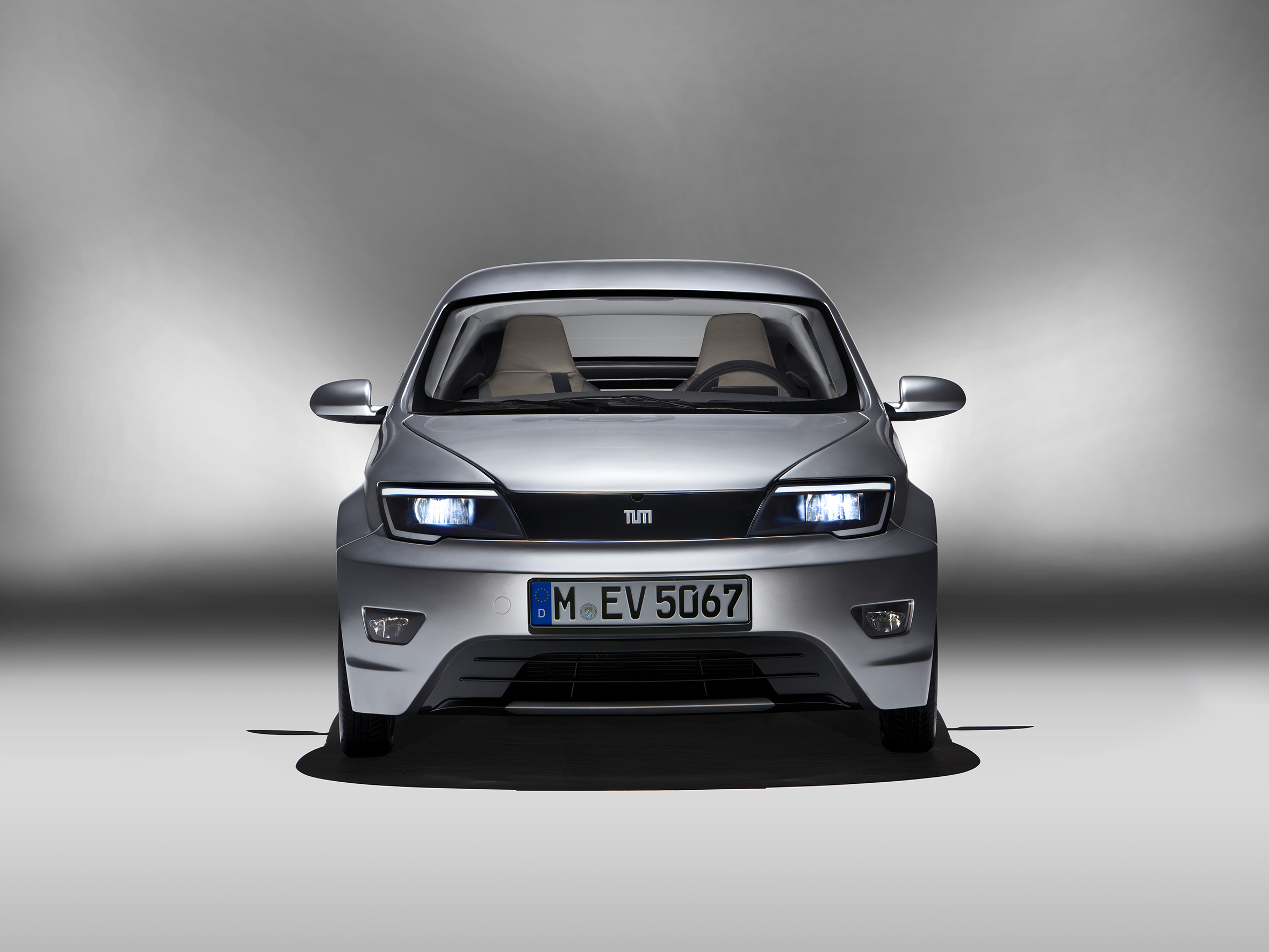
Visio.M by TUM: young green project

visiom_TUM

Alla settima fiera della Mobilità Elettrica e Ibrida di Monaco di Baviera è stata presentata la versione definitiva della concept elettrica Visio M, una piccola vettura dalla linea piacevole che promette costi abbordabili, sicurezza, comfort, autonomia ragionevole e zero emissioni. Lo studio e lo sviluppo del progetto sono stati curati da un team dell’Università Tecnica di Monaco di Baviera (TUM), che ha realizzato la nuova auto green in collaborazione con alcuni specialisti del settore automotive. Oltre alla TUM, nel progetto Visio M, sono coinvolti BMW AG e Daimler AG, i produttori di componenti Autoliv BV & Co. KG, Continental Automotive, Siemens AG, Texas Instruments Germany, TUeV SUeD AG. Il progetto è stato sviluppato nell’ambito del programma IKT 2020 con la priorità ”tecnologie chiave per la mobilità elettrica – POWER” promosso dal Ministero federale dell’istruzione e della ricerca (BMBF), con una durata di 2 anni e con un investimento totale di 10,8 milioni di euro. Il progetto di ricerca è nato visto il costante aumento delle persone che valutano l’acquisto di un’auto elettrica, possibilmente alimentata da energia prodotta da fonti rinnovabili. Di fatto la Visio M stabilisce, come recita il comunicato dell’Università Tecnica di Monaco di Baviera, nuovi standard in termini di efficienza e sicurezza. La Visio M vanta prima di tutto un design ergonomico in cui l’occhio del pilota è il nuovo punto di riferimento da cui sono partiti i ricercatori per la disposizione dei sistemi di sicurezza e l’individuazione del miglior angolo di visuale per controllare il traffico. La gestione dei sistemi di bordo è affidata a un touch screen centrale (un po’ come accade sulla Tesla Model S), per ottenere un’interazione uomo-macchina il più facile possibile. Ai fini della sicurezza la Visio M dispone di una struttura monoscocca in plastica rinforzata con fibra di carbonio e materiali stratificati ultraleggeri ma estremamente resistenti. Inoltre una scansione a 360 gradi dell’ambiente circostante, mediante l’uso di sensori, permette di rilevare per tempo ogni situazione di guida critica. La vettura che conta un’autonomia di circa 160 km, può ospitare due persone e bagagli. Con soli 15 kW di potenza la Visio M  può raggiungere i 120 km/h. Il design è dinamico e sportivo, mentre le dotazioni comprendono sistemi di infotainment e navigazione con comandi di gestione al volante e sedili riscaldati. Il motore è alimentato da batterie che hanno un tempo di ricarica tra 3 e 4 ore da una presa di corrente domestica da 230 Volt. Il costo totale del veicolo e per il funzionamento dovrebbe comunque essere inferiore a quello di un veicolo analogo con motore termico. Una delle caratteristiche salienti della Visio M, in termini di prestazioni e consumo, è la leggerezza garantita dall’abitacolo in plastica, rinforzata con fibra di carbonio e del tetto realizzato in alluminio, grazie a questi accorgimenti la vettura non supera i 450 kg di peso.

visiom_back

At the 7th exhibition of Hybrid and Electric Mobility of Munich (Germany) was presented the final version of the electric concept Visio M, a small car with a nice line that promises affordability, safety, comfort, reasonable autonomy and zero emissions. The study and development of the project were driven by a team from the Technische Universität München (TUM), which has developed a new green car in collaboration with specialists in the automotive world. In addition to the TUM Project in Visio M, are involved BMW AG and Daimler AG, the manufacturers of components Autoliv BV & Co. KG, Continental Automotive, Siemens AG, Texas Instruments Germany, TUeV Sued AG. The project was developed as part of the IKT 2020 with the priority ” key technologies for electric mobility – POWER ” promoted by the Federal Ministry of Education and Research (BMBF), with a duration of 2 years and a total investment of 10.8 million Euros. The research project was born given the steady increase of people who value the purchase of an electric car, possibly powered by electricity generated from renewable sources. In fact, the M Visio provides, as stated in the press release of the Technical University of Monaco of Bavaria, set new standards in terms of efficiency and safety. The Visio M is first of all an ergonomic design where the eye of the pilot is the new reference point from which they started the research for the provision of security systems and identifying the best viewing angle to control the traffic. The management board systems is carried out by a central touch screen (like in the Tesla Model S) to obtain man-machine easy interaction. For safety reasons the Visio M has a monocoque carbon fiber reinforced plastic and ultralight but extremely strong laminated materials. Moreover, a scan 360° of the surrounding environment, through the use of sensors, allows to detect critical driving situation. The car has a range of about 160 km, can accommodate two people and luggage. With only 15 kW of the Visio M can reach 120 km/h. The design is dynamic and sporty, while amenities include infotainment and navigation system with controls on the steering wheel and heated seats. The motor is powered by batteries which have a charging time between 3 and 4 hours from a household 230V socket. The total cost of the vehicle and maintenance should be less than that of a similar vehicle with a gas engine. One of the salient features of the Visio M, in terms of performance and consumption, is the cell lightness guaranteed using plastic reinforced with carbon fiber and the roof made ​​of aluminum, thanks to these features the vehicle does not exceed 450 kg in weight .

VisioM_Front

Detroit Electric SP:01, final cut: it’s a coupe

SP01
Svelato oggi il design esterno definitivo della nuova vettura Detroit Electric, una pura elettrica sportiva a due posti che la casa automobilistica sta avviando alla produzione di serie. La leggera SP:01 in edizione limitata sarà la più veloce automobile elettrica prodotta in serie in vendita in Asia, Europa e Nord America a partire dal 2015. Presentata a livello di prototipo al Motor Show di Shanghai nel 2013, il design della SP:01 è stato attentamente aggiornato prima dell’inizio della produzione, previsto nel corso di quest’anno nel nuovo stabilimento nel Regno Unito, per migliorare ulteriormente l’aerodinamica del veicolo. L’elemento che più colpisce del design è il nuovo, evidente assetto coupé che sostituisce gli archi che caratterizzavano il prototipo sui lati dei finestrini posteriori. Le linee esterne sono stato ottimizzate con l’analisi della fluidodinamica computazionale (CFD) che ha consentito di migliorare il flusso dell’aria e ridurre le turbolenze per massimizzare prestazioni e stabilità.  Le novità nel design della SP:01 assicurano il mantenimento delle promesse di fissare nuovi standard di performance e maneggevolezza nel segmento EV. Il potente motore elettrico consentirà all’auto di raggiungere la notevole velocità massima di 249 km/h e uno scatto da 0 a 100 in soli 3,7 secondi.


The final exterior design of Detroit Electric’s all-new, pure electric two-seater sports car, the SP:01, is revealed today as the company gears up for production. The lightweight, limited-edition SP:01 will be the world’s fastest production electric sports car when it goes on sale in Asia, Europe and North America, starting in 2015. Revealed as a prototype at the 2013 Shanghai Motor Show, the design of SP:01 has been subtly updated to further improve the vehicle’s aerodynamic performance, ahead of the start of production at a new facility in the UK later this year. The most striking element of the design is the bold new fastback configuration, which replaces the prototype’s flying buttresses on either side of the rear window. The exterior design has been optimised using computational fluid dynamics (CFD) analysis to provide enhanced airflow and reduce turbulence, for maximum performance and stability.  The changes to SP:01’s design ensure that it will deliver on its promise to set new standards for performance and handling in the EV segment. Its high-power electric motor will propel the car to an impressive 155 mph top speed and a 0-60mph time of just 3.7 seconds.
DetroitElectric_SP01

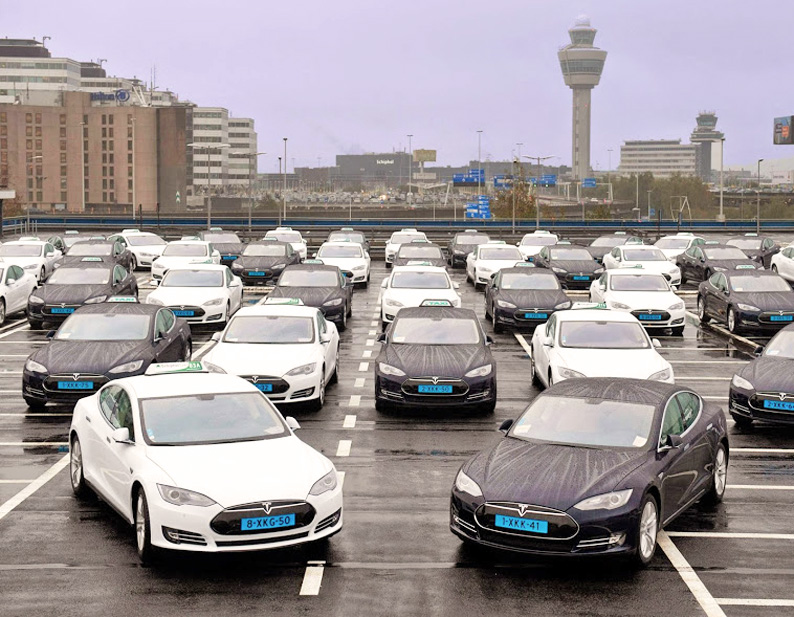
16.10.2014 TESLA taxis in Amsterdam are ready

Tesla_taxis_Schiphol161014from http://gas2.org/ article

Amsterdam Airport Enlists 167 Tesla Taxis 

In a bid to reduce its carbon footprint, Amsterdam’s main airport has enlisted the aid of 167 Tesla Model S taxi cabs. The cutting edge taxis are just a small part of the Schiphol airport to be among the greenest in the world. The taxi service will actually be operated by three competing companies, all of which will use the Model S. One of the companies, Taxi Electric, had been thought to be using the Nissan LEAF, but the Model S it turns out is the better option. Numerous government incentives bring the price of the Model S down, and in some places in the Netherlands the Nissan e-NV200 electric van can be had for less than $10,000. The incentives are there, as is Tesla’s European assembly plant. The electric taxi fleet is one of the many efforts on the part of the Schiphol airport to reduce its carbon footprint, like extensive use of LED lighting and 35 BYD electric buses, among other things. The rollout of this new electric taxi service begins today, and the minimum trip cost comes in at a substantial 25 euros, though each car comes equipped with free 4G LTE wireless service.


L’aeroporto di Amsterdam attiva 167 taxi Tesla

Nel tentativo di ridurre l’impatto delle sue emissioni, il principale aeroporto di Amsterdam ha messo in campo l’aiuto di 167 Tesla Model S taxi. I taxi d’avanguardia sono solo una piccola parte dell’impegno dell’aeroporto Schiphol per essere tra i più verdi del mondo. Il servizio taxi sarà effettivamente gestito da tre società concorrenti, i quali utilizzeranno la model S. Una delle società, Taxi Electric, era stata pensato per operare con la Nissan LEAF, ma la model S è risultata l’opzione migliore. Numerosi incentivi governativi abbassano il prezzo della Tesla, e in alcune parti in Olanda un pulmino elettrico Nissan e-NV200 può essere comprato per meno di 8000 euro. Gli incentivi ci sono così come lo stabilimento europeo di assemblaggio di Tesla. La flotta di taxi elettrici è uno dei tanti sforzi da parte dell’aeroporto di Schiphol per ridurre le emissioni, come il largo uso di illuminazione a LED e 35 bus elettrici prodotti dalla cinese BYD, tra le altre cose. Il lancio di questo nuovo servizio taxi elettrico inizia oggi (16 ottobre), e il costo minimo del viaggio arriva a ben 25 euro, anche se ogni auto è dotata di servizi wireless 4G LTE gratuito.

Tesla Model S P85D: pure luxury fury

TESLA_model_S
Se qualcuno ancora pensava che non si potesse ottenere di più da un mezzo elettrico eccolo servito. Tesla Motors ha svelato il mistero della lettera D che circolava in Internet, D come dual motor e quindi 4WD. La Model S e le prossime Tesla che riporteranno questa lettera nel badge saranno le “integrali” della famiglia, un po’ come “Quattro” per Audi e “X-Drive” per BMW (giusto per fare un paio di esempi). Oltre a questa caratteristica che alza di molto l’asticella delle performance dinamiche del modello entra a far parte della dotazione anche l’auto pilot (sistema che assiste al mantenimento della carreggiata e delle distanze in marcia e parcheggia da solo la vettura). Come detto ora il livello delle prestazioni è ancora più alto, la Model S P85D aggiunge ai già impressionanti 470CV del motore posteriore i 221CV di un secondo motore all’anteriore per una potenza complessiva di 691CV, portando lo scatto dello 0-100km/h al motociclistico valore di 3.2sec e la velocità massima a circa 250km/h (la versione 2WD tocca “solo” i 210). Le consegne di questa nuova generazione di Model S cominceranno da Febbraio 2015, l’opzione D alza il prezzo di circa 11500 euro.


If you thought that you can’t do better with EV, now you can do better than ever. Tesla Motors has unveiled the mystery of the letter D that circulated on the Internet, D as dual motor and 4WD. The Tesla Model S and the next models with this letter in the badge will be the “4WD” of the family, like “Quattro” for Audi and “X-Drive” for BMW (just to give you a couple of examples). In addition to this feature that raises performance of the model now you can find also auto pilot system (which assists in maintaining the track and distance driving and park the car alone). As said now the level of performance is even higher, the Model S P85D adds to the already impressive 470HP rear engine a second 221HP engine at the front, 691HP total power, now the 0-60MPH reaches the motorcycle value of 3.2sec and the maximum speed at 155MPH (the 2WD version top speed is “only” 130MPH). Deliveries of this new Model S option will begin in February 2015 adding 14600$ to the final price.

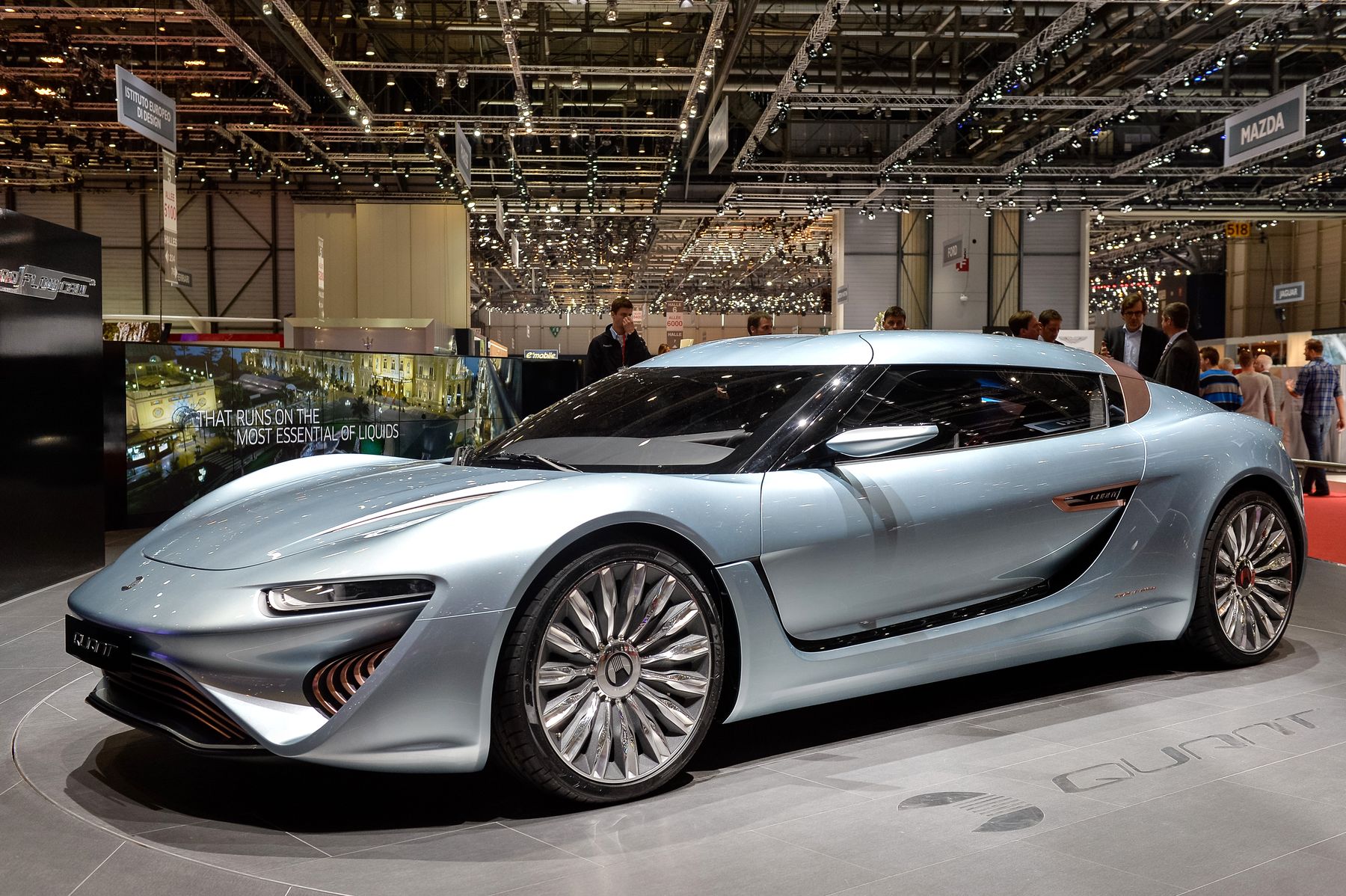
Quant e-Sportlimousine: follow the flow

QUANT_eSpor_limousinePresentata al salone di Ginevra 2014 la svizzera Quant e-Sportlimousine è una vettura elettrica sviluppata sfruttando l’innovativa tecnologia nanoFLOWCELL composta da batterie di flusso con prestazioni stimate superiori rispetto a qualsiasi altro tipo di accumulatore oggi in commercio, unisce i pregi delle batterie elettromeccaniche ai vantaggi delle fuel cell, rivelandosi al contempo più capace, prestazionale e leggera: il rapporto di prestazioni-per-peso è cinque volte superiore rispetto ad una batteria agli ioni di litio. Questa vettura prevede infatti due serbatoi (da 200 litri) contenenti elettroliti, i quali passando attraverso una specifica membrana innescano una reazione chimica che crea energia. Questo processo alimenta un accumulatore da 600 V, che a sua volta supporta quattro motori (uno per ruota) per una potenza di 653 CV. La Quant accelera così da 0 a 100 km/h in appena 2.8 secondi e può superare i 380 km/h, pur misurando ben 5.25 metri e pesando 2.3 tonnellate e garantisce un’autonomia compresa fra 400 e 600 chilometri. La e-Sportlimousine monta cerchi in lega da ben 22 pollici, mentre la struttura delle portiere (ad ala di gabbiano) rende superfluo il montante centrale. Il telaio è in fibra di carbonio ed il corpo vettura in compositi. A luglio la vettura ha ottenuto l’omologazione presso il TUV e quindi è possibile immatricolarla in tutti i paesi europei. Anche questo è un esempio di un futuro della mobilità a zero emissioni che diventa sempre più vicino e reale. Quale sarà il prossimo passo di questo prototipo?
QUANT_eSpor_limousine2Presented at the Geneva Motor Show 2014, the swiss Quant e-Sportlimousine is an electric car developed using the innovative technology nanoFLOWCELL that consists of flow batteries with estimated performance superior to any other type of battery on the market today, combines the advantages of standard batteries to the advantages of fuel cells. This type of batteries are the same time more capable, performing and light: the ratio “performance-to-weight” is five times higher than a lithium-ion battery. This car provides for two tanks (200 liters each) containing electrolytes, which, passing through a specific membrane trigger a chemical reaction that creates energy. This process feeds a 600 V accumulator, which supports four motors (one per wheel) for a total power of 653 HP. The Quant accelerates from 0 to 100 km/h in just 2.8 sec. and can exceed 380 km/h, while measuring 25.5 meters and weighing 2.3 tons and provides a range between 400 and 600 kilometers. The e-Sportlimousine mounts 22″ alloy wheels, while the structure of the doors (gull-wing) eliminates the B-pillar. The frame is made ​​of carbon fiber and the car body in composites. In July, the car has been approved by the TUV and then you can register it in all European countries. This is also an example of a future of zero-emission mobility becomes more and more close and real. What’s the next step of this prototype?
QUANT_eSpor_limousine_int

Beijing ePrix: 1st Formula E race

Il 13 settembre si è tenuta a Pechino la prima delle gare del calendario della FIA Formula E, inizia così una nuova era, l’era delle monoposto a zero emissioni. Una gara combattuta fino all’ultimo giro e ricca di emozioni (nel finale uno spettacolare incidente tra Nicolas Prost e Nick Heidfeld, per fortuna senza conseguenze) che ha visto la vittoria del pilota brasiliano Lucas di Grassi del team Audi Sport ABT. Il prossimo appuntamento sarà in Malesia il 22 novembre a Putrajaya.

On September 13, there was in Beijing the first race on the calendar of the FIA Formula E, so begins a new era, the era of zero-emission race cars. A harsh race until the last lap and full of emotion (in the end a spectacular crash between Nicolas Prost and Nick Heidfeld, fortunately without consequences) with the final victory of the brazilian driver Lucas di Grassi for the Audi Sport ABT team. The next race will be in Malaysia on November 22 in Putrajaya.

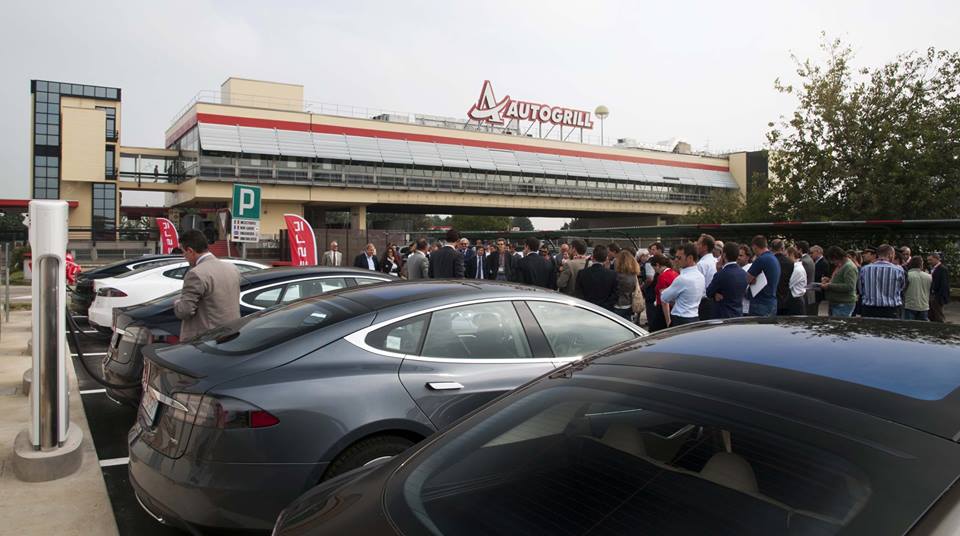
TESLA Supercharger: la prima stazione italiana

dalla pagina Facebook di Tesla Motors

tesla_1st_supercharger_italy
Inaugurata la prima stazione Supercharger di Tesla Motors in Italia. La stazione di Supercharger di Dorno (PV) sulla A7 Milano-Genova faciliterà i proprietari di Model S a viaggiare gratuitamente in tutto il nord Italia e non solo. Altre stazioni di Superchargers sono prossime all’apertura. Presto l’elettrico sarà una realtà fruibile senza limiti anche in Italia e si potrà viaggiare a zero emissioni. Si prepara un grande cambio di mentalità e percezione del viaggio e dell’ambiente, voi siete pronti?
tesla_1st_supercharger_IT